


시놉시스
조지아의 남부에 위치한 도시 치아투라는 한때 전세계 50%에 달하는 망간을 생산하는 탄광 마을이었지만, 이제는 쇠락한 유령 도시이다. 음악선생은 어떻게든 마을을 살려보고자 새로운 공연 준비를 하고, 광산에서 일하는 사내는 연기를 하고 싶지만 쉽게 결정을 내리지 못한다. 두 소녀는 계속해서 황폐한 마을을 달린다. 유령같은 마을의 정교하고 섬세한 풍경이 펼쳐진다.
감독
-
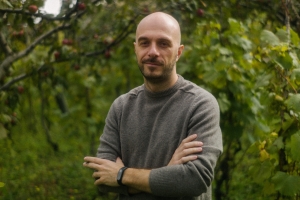 라티 오넬리
Rati OneliCity of the Sun (2017)In 1932 after a visit he made to the Soviet countryside, Boris Pasternak wrote in shock: “what I saw there cannot be described in any words. It was such inhuman, unimaginable misery, such horrifying disaster, that it became somewhat abstract and wasn’t possible to grasp mentally. I became sick.”
When I visited Chiatura for the first time in the summer of 2014, Pasternak’s words immediately came to my mind. Even though it was a different place and time, I instinctively understood what he meant by abstract. The surreal beauty and grand devastation dismayed me. But I was as shocked by the inhabitants' apparent nonchalance and sense of humor about the situation they found themselves in: their simultaneous defiance and complete surrender. They walked on land filled with immense wealth, yet they possessed nothing. They looked death in the eye while riding corroded steel air-trolleys to work, but spoke of human beauty and love while covered in mud inside the dangerous mines. I couldn’t think in any other terms but abstract.
I lived and researched alone on and off in Chiatura from August 2014 to May 2015. When I arrived to Chiatura for the first time the city was entirely taken over by lush vegetation: it was literally swallowed by the jungle. I felt like I had accidentally discovered remnants of a great, ancient civilization that had been swallowed up ages ago. It’s as though the people who live there now had no direct relation to the once great city lying in fragments around them. Compared to the ancient mountains and the grand architecture, the inhabitants of the city seemed small, both literally and figuratively. They didn’t influence the environment at all, but were actively and violently influenced by the city itself, which shaped their mentality and daily lives. The inhabitants seemed to carry mythical memories of the times past, but were not fully conscious of their relationship to it.
In 2014, I had already lived in Chiatura for several months but I wasn’t sure if I could make a film there. I knew that the magnitude of human misfortune that I witnessed demanded much more from me than just a desire to tell a “story” or document physical destruction. The sense of responsibility was overwhelming and paralyzing at the same time.
A dying city presents an altogether different realm of human existence. Here the relativity of time flow is felt strongly; time slows to a crawl and attains almost physical viscosity. Sense of despair and impending doom, mixed with a natural imperative to survive shapes the inhabitants in unconventional ways. Here one can make peace with death, but still find purpose in performing rituals that re-affirm life; here complete surrender and defiance co-exist without contradiction. As an outsider, it was impossible to enter this world just by analyzing it or following standard logic.
The only way to gain access into their world was through pure contemplation. Not observation, but contemplation. Living in the city, being part of daily life and rituals, just gazing for as long as necessary, were some of activities that allowed for my own version of truth to emerge from the reality. This freed me as a filmmaker from the usual constraint of needing to tell a standard story.
As a result, City of the Sun is my subjective impression of the place where the film events unfold.
The characters of the film are bodies existing within the peculiar spacetime of this spectral place. They use their bodies to project themselves down the unknown narrative spiral of their lives. Several improbable but true stories intersect in the film. Athlete sisters run methodically, like robots and it is the only thing they can do to survive. It also seems, however, that if they stop running, a spell would be broken, a catastrophe would strike and the entire city would come to a grinding halt. Zurab keeps destroying the city to build a new life for himself and his family, and Archil moves in a limbo unable to make a decision between his passion (theater) and money (working at the mines).
The characters of the film seem to be violently thrown into a life they didn’t choose and cannot escape. The question is whether they will wake up one day or just continue existing in a state of hypnagogia, somewhere between dreaming and wakefulness. The futility of their efforts and the authenticity of their lives is in the balance. Chiatura itself, is the main character and connects Zurab and the other characters. The city is a living organism, where cable cars crisscross in the air above it like blood vessels. It reminds us of an alien outpost, a colony where people are enslaved to provide fuel for the mothership.
The city itself is a fantastical space where time is frozen and people live in a hypnotic state. The city and the characters exist in a timeless dimension, rather than a specific locale of a postSoviet nation. The lives, dreams and hopes of the protagonists are interwoven into the fabric of the decaying city and their destinies are bound with it.
Editing blocks are connected with each other through poetic, associative montage and allow ample time for the viewer to experience this world and not simply follow the characters’ actions.
Character evolution and their metamorphosis throughout the film is organic and unforced. I would like the audience to gradually grow aware of the transformation of characters, rather than to understand it intellectually through a sudden cut or other editing technique. In life, we perceive the changes in people around us gradually, by observing their actions or reactions that seem new to us or feeling the changes in their mood and energy. Similarly, because character transformations in my film are subtle and almost imperceptible, this realization can happen subjectively according to the individual viewer, at any point in film, not simply according to the editing decision, which usually is a cue designed by the director. The film time in The City of the Sun allows the viewer to live with the characters and reflect on the film microcosm together with them.
Characters in the film exist in perpetual hypnagogia; their gaze betrays yearn for the unknown. Zurab lives in this nightmare, but he has his own dreams that he uses as the means of escape from the nightmare of the city. Zurab is the most powerful character in the film, choosing to fight, choosing to destroy as the means of survival and making a statement. Unlike other characters, he still retains the power of dreams. He is the most important character with vision. Archil (the miner/actor) is a character who has lost the power to affect his surroundings. He is almost a victim of circumstances unable to choose between theater, his work at the mines or his family. He still retains the ability to dream, but the ability is so feeble that he is permanently stuck in the limbo. Yet, more starkly different are the girls. They literally have no voice. All they can do is run. They live in a harsh reality and they run to survive. They run just to be.
Yet, paradoxically, the characters also affect the world vice-versa. The girls are the tiniest, but very important parts of a complex mechanism of the city. The city magically depends on the running and the robot-like resilience of the girls who have no choice but to run in order to survive. It seems as though, if the girls stop running, the city would come to a halt as well. In turn, Archil becomes a link between the 'mythical', 'heroic' world of Zurab and the harsh reality of the girls’ life. Archil is constantly shuffling between these two worlds, unable to choose, but connecting them. On the one hand he can’t give up his dreams and leave the theater, but on the other hand Archil is just one of many disenfranchised workers in the mines who have no voice and no choice but to work for survival. Archil is part of the system, a merciless machine that is bigger and stronger than him.
Zurab is more like a mythical hero who battles with the giant ‘Titans’—he feverishly demolishes gigantic buildings as if he tries to destroy archaic idols. He chooses to fully dedicate himself to the fight with proverbial windmills, to be an artist against all odds and perhaps expire in the uneven fight than to give up.
Like so, they all become equally important elements of the microcosm of the film.
I wanted to approach everything very calmly, almost like a meditation so wherever possible the film uses long takes. My hope is that through a series of long takes the uninterrupted reality could
flow to create a very potent sense of film time and space and create for the viewer another dimension where it’s possible for everyone to uncover his own version of the truth.
For me, City of the Sun is a testament to human extremes: our desire for monumental architecture and sweeping destruction. The city carries seeds of both universal suffering and hope in its DNA. No matter where we go in the world we encounter similar examples of human ingenuity and carelessness: urban deserts, originally erected to serve human needed and aspirations and subsequently destroyed by the humans they were originally designed to serve.
My aim was to make a film which seeps through the viewers’ pores and stays with them, a film that is at times intangible like poetry and to which the viewer can come back again and again for more emotion. I don’t know if I have achieved it, but my primary intention is to convey emotional knowledge and emotional impact. In addition to watching the story, I’d like the viewer to have the sensual experience of reverie. Bresson said, “I’d rather people feel a film before understanding it. I’d rather feelings arise before intellect.”
리뷰
<태양의 도시>의 이 마을은 지구상 어디쯤에 위치해 있는 곳일까. 이 질문에 답하는 것이 꼭 필요한 건 아니라고 영화는 생각하는 것 같다. 조지아의 서쪽 지역에 위치해 있고 오래전 한때는 광산업의 영향력 있는 산업지구였지만 현재는 거의 폐광된 것이나 마찬가지인 것처럼 보이는 치아투라에서 촬영되었다는 사실은 그저 사실일 뿐 이 영화의 핵심은 아니다. <태양의 도시>에는 앞선 사실보다는 그 사실로 인해 유발된 사실 이후의 시간 혹은 사실 이후의 분위기 그러니까 기울고 쇠퇴한 그 결과 찾아들게 된 유령적 상태가 핵심이다. 그러므로 이 마을은 지구상 어디에라도 있을 법한 쇠퇴와 몰락의 그 마을들을 연상시키는 추상적 모델로도 비친다. 몇 사람이 등장한다. 광산의 소수 노동자들, 동네의 아주머니들과 아이들과 그들을 가르치는 음악선생, 홀로 벽을 부수는 남자, 달리기 훈련하는 두 명의 선수들. 마을에는 그들만 있는 것은 아니겠지만 영화는 오로지 그들로서만 이 마을을 그린다. 창공에서 시작된 어느 시선은 이내 지하 갱도의 인부들 사이로 들어가더니 마을을 느리게 돌아다니며 마을의 풍경과 사람들의 표정을 관조한다. 마치 여기에는 눈에 보이지 않는 견자의 시선이라도 있는 것 같다. 이 견자의 시선에 황폐함, 적요함, 쓸쓸함, 그러나 아직까지는 희미하게나마 남아 있는 정겨움과 소박함이라는 마을의 분위기가 포착된다. 영화의 제목은 토마스 캄파넬라의 유토피아에 관한 동명의 책에서 가져왔으니, 역설적이다. [정한석]
Credits
- Director Rati Oneli
- Producer Dea Kulumbegashvili, Rati Oneli, Jim Stark
- Cinematographer Arseni Khachaturan
- Editor Ramiro Suarez
- Sound Sonia Matrosova, Alexey Kobzar
Contribution & World Sales
- Contribution & World Sales Jasmina Vignjevic
- E-Mail admin@syndicado.com