
국제경쟁
대상(흰기러기상)
The Tiniest Place
- Mexico
- 2011
- 104min
- 35mm
- Color
Synopsis
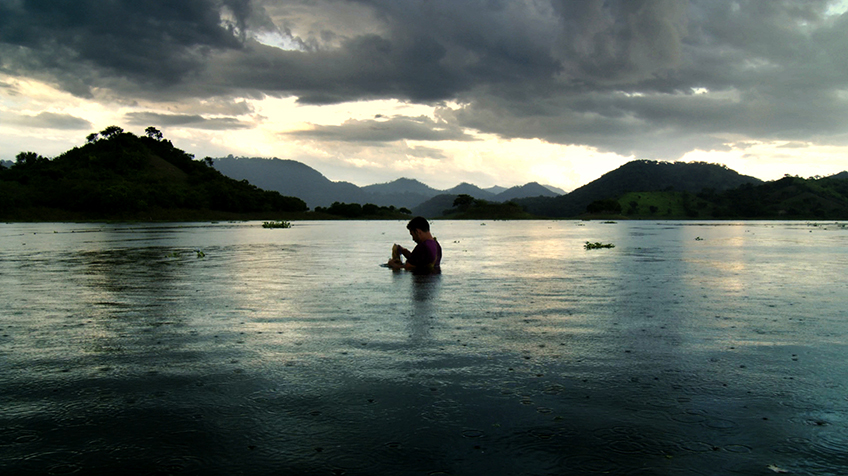
In the republic of El Salvador, many people have been killed in the civil war. The people of The Tiniest Place couldn’t escape that fate either. They lost their village, families and neighbors to the war that’s been going on for years. The survivors return to their ordinary lives in the village. The place is not what it used to be, but they begin their lives anew. The Tiniest Place focuses on relationships between the villagers, while it also tries to invoke the presence of those natural objects surrounding them. As the scenery around the village overlaps with the scars left by the war, one feels the temptation to resort to a clichéd metaphor about the temporal and the eternal. But as we get used to its rhythm, the film seems to provide us with a transcendental energy that renders those metaphors meaningless. Nature itself is ridden with tragedies of its own, and so is the history of mankind. It does not mean this film belittles actual tragedies of life caused by ideological conflict. On the contrary, the film makes us feel the circulating order of higher level that embraces the scars of this world. This perspective goes hand in hand with the attitude of the villagers, who keep on with their lives in an optimistic spirit regardless of the ordeal they have just been through.
Their lives will go on, somehow. Not alone, but together. This is not propaganda, nor a declaration. It is what the villagers have learned along the way, something that gets engraved into one’s body. This film makes us understand that fact. (KIM Young-jin)
Director
-
 Tatiana HUEZOBorn in San Salvador, 1972. When she was four years old she moved to Mexico City where she lived and studied. She is a graduate of the Center of Capacitación Cinematográfica. She has directed several short fims and documentaries. She received a grant from the National Culture and Arts Fund to produce the documentary Family Portrait and to study for a MA in Documentary Filmmaking at the University of Pompeu Fabra in Barcelona, Spain from 2004 to 2006. The Tiniest Place is her feature debut.
The Tiniest Place (2011)
Family Portait (2008)
The Coreo of the Earth (2001)
Caustic Time (1998)
심사위원 특별상
Bombay Beach
- USA
- 2011
- 80min
- HD
- Color
Synopsis
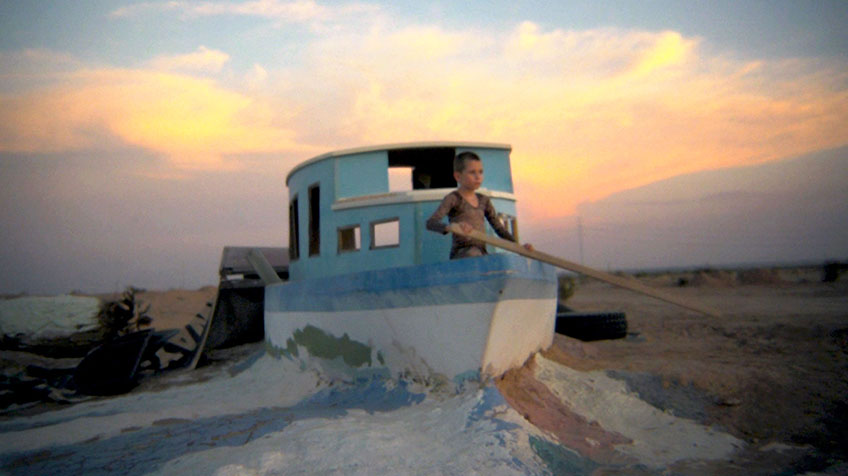
Bombay Beach is located along the Salton Sea in California. Nothing more than a shallow puddle that used to dry up completely during dry seasons, Salton Sea underwent massive engineering work in the early 20th century that changed the waterway for the purpose of drawing agricultural water. As a result, it became a gigantic lake 1.6 times the size of Seoul. People started to build resort sites around Bombay Beach and the Salton Sea to enjoy fishing, swimming and sailing. At one point this place, which earned the nickname ‘Heaven in the Desert’, even seemed to become a hotspot for speculation. But the waterway developed a blockage which corroded the lake and raised its salinity. And as factory waste flowing in from Mexico threatened the ecosystem, the beach has since the 1950s become a symbol of environmental hazard and a broken American Dream. Those who have remained are people with troubled histories - from ex-oil field workers who are now alcoholics to ex-gang members sickened by the level of violence and drugs they had to deal with in the city. Yet Bombay Beach is still known for its photogenic beach at sunset. While filming Zach Condon’s one-man band Beirut, director Alma Har'el was seduced by the beach’s unique landscape and inspired to make this film. And as she encountered the miserable lives of the residents there, the director incorporated her experience as a music video director to capture the clash between the two opposing images of the Bombay Beach. In particular, her treatment of the children’s dance sequence and use of music by Beirut and Bob Dylan, along with her liberal attempts to break away from documentary conventions, present themselves as a fresh approach to documentary filmmaking. (CHUN Jin-su)
Director
-
 Alma HAR’ELBorn and raised in Israel, Alma Har’el began her work as a photographer and video artist. While working in New York and London, her live video-art performances with musicians led her to directing music videos. Her frequent collaborations with singer Zach Condon of the band Beirut brought her several nominations in film and music video festivals around the world.
The video for Beirut’s Elephant Gun was chosen as one of the best videos of the decade in 2010 by several publications.
Currently she lives in Los Angeles where she recently directed Bombay Beach, her first film.
Bombay Beach (2011)
최우수 한국다큐멘터리상
My Father’s House
- Korea
- 2011
- 49min
- HDV
- Color

Synopsis
The director of My Father’s House does not understand her father, who lives in Eunma Apartment in Daechi-dong, an icon of pricey housing, and still refuses to move out while harassed with debts, believing that the house’s price will go up further. She has rarely talked about it with her father, who has such different political viewpoint and values from her, but she decides to start a conversation with him in front of a camera. My Father’s House provides a clue to understanding Gangnam, the privileged area southeast Seoul: ‘Gangnam conservatives’, ‘home of private education’, skyrocketing apartment prices, and redevelopment – all of these concept are interlinked. At the same time, the film is the director’s message to her father, who earned their living while working abroad, and her mother, who sacrificed her entire life for her children. The director, who wants to live in her own place, realizes that her father’s obsession with the apartment is not that different from her own desire. Although this film shows understanding and compassion toward the older generation, it does not avoid questioning their values and orders. Thirty years ago, the director’s father constructed buildings in the desert and bought a house in Gangnam. But maybe this house is a castle on the sand. Then how would the director buy her own place? Starting from the difference between her father and herself, the director finds common things and further differences. In this process, private relations and experiences are translated in a social context, and the director experiences dialectical maturity by recognising and constructing her own subjectivity. (PARK Hye-mi)
Director
-
 KANG YU Ga-ramKang Yu Ga-ram graduated from Ewha Womans University, majoring in women’s studies. She is a member of ‘Play, Girls, Play’, a feminist culture group, and is participating in the production of The Girl Princes, a documentary film. She has produced several short films, such as The Present, and I’m Not Just Biased. My Father’s House has been invited to the 2011 Seoul Independent Documentary Film & Video Festival and Jeonju International Film Festival.
모래 My Father’s House (2011)
선물 The Present (2010)
그냥 치우친 건 아니야 I’m Not Just Biased (2010)
관객상
Goodbye Homerun
- Korea
- 2011
- 84min
- HD
- Color

Synopsis
The baseball team of Wonju High School has deep scars from repetitive defeats and failures. The manager and coach try to encourage and motivate the depressed players. The students started playing baseball when they were elementary school students with no definite idea and just continued playing hard so as not to be scolded, but this baseball has almost become a possible occupation for them now. But they faced hard reality whenever they failed to pass the preliminaries in every competition. In one competition after countless failures, however, the team miraculously makes it to the semi-finals. Goodbye Homerun is not a documentary about the achievements of a baseball genius or the drama of a heroic victory. The film focuses on each member of the high school team, who experience another world and grow up through their baseball games – a microcosm of life. Among more than 700 baseball players graduating high school or university, only 70 students are recruited by professional baseball clubs. Moreover, in order to be the first string, they need to enter an endless competition cycle, which is also a reality of life. Some graduates go to college and some quit baseball altogether. But the experience from baseball games would help them to play their own baseball game in everyday life. (PARK Hye-mi)
Director
-
 LEE Jung-hoLee Jung-ho was born in Wonju in 1982 and graduated from Korean National University of Arts, School of Film, TV & Media.
He has previously made two documentary films, Oh My Doctor in 2006 and Depth Lose in 2007. Dreaming in the Fall, a short film where he played the lead, was screened at the 2007 Miseen-scene Short Film Festival. He is interested in media education, and is currently teaching media in Hana Highschool.
굿바이 홈런 Goodbye Homerun (2011)
깊이상실 Depth Lose (2007)
젊은 그대 Oh My Doctor (2006)
청소년경쟁부문
최우수상
Uncomfortable Eyes, Uncomfortable Truth
- Korea
- 2011
- 18min
- DV
- Color

Synopsis
Going to an obstetrician is not a big deal, but what if you saw one of your friends go there? You’d probably think she has been ‘knocked up’. And a lot of teenagers don’t have enough knowledge about contraception, even though they think getting pregnant would be a nightmare. The directors became curious: what is wrong with these teenagers’ sexuality? So they set out on an investigation of their own. They visit convenience stores to buy condoms and interview Ms. Ku Seong-ae, a famons specialist in sex education. They sift through statistics and observe sex education classes. In their investigation, the directors uncover several uncomfortable truths: that teenagers are locked into a conservative sex-culture; that they are being given superficial, meaningless sex education; and that they familiarize themselves with sex by watching porn. Through these facts, the directors came to see society’s double standard for sexuality, and its pretentious attitude toward sex. In the end, this film turns out to be an insolent(!) question that reveals the insolent(!) attitude of the grown-ups, who explain that ‘beautiful encounter’ with ‘flowers and bees’. (KANG Seol-hwa)
Director
-
 PARK Ka-youngPark Ka-young is a student of Korean Animation Highschool, majoring in film direction. She was an assistant director for Soggoop-jang-nahn, and she has directed her first documentary film. Her aspiration is to be an ad film director with her own style.
불편한 시선, 불편한 진실 Uncomfortable Eyes, Uncomfortable Truth (2011) -
 YOU Seok-hyunYou Seok-hyun has had an interest in videos since middleschool and has made various UCC’s and documentary films. He won a grand prize in a film competition held by MBC, Korea Communications Commission and the Province of Gyeongsangnam-do. He is now a second-grader in Korean Animation Highschool, a film direction major.
불편한 시선, 불편한 진실Uncomfortable Eyes, Uncomfortable Truth (2011)
부재중전화 A Missed Call (2010)
우수상
High School Student’s Guide to Be a Filmmaker
- Korea
- 2010
- 36min
- HDV
- Color
Synopsis
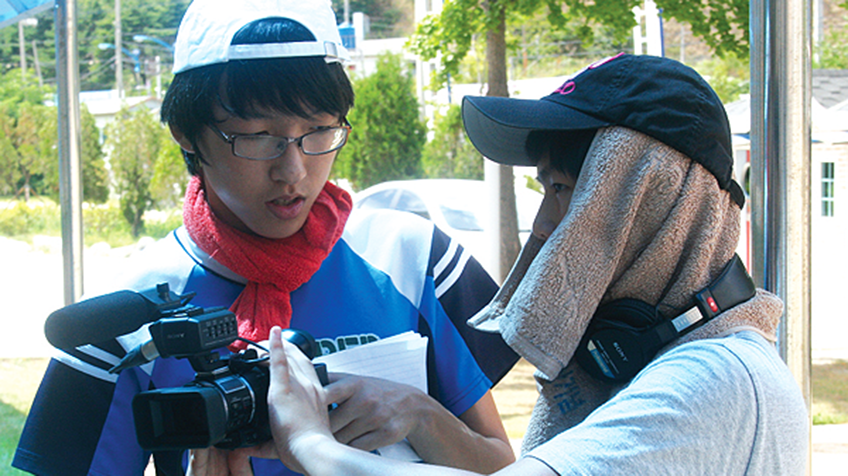
This film is a guide for those teenagers out there who want to work in the field of film and video. The directors, teenagers themselves, set out to meet real directors in person, to ask whatever they are curious about. The venue is Jeongdongjin Independent Film & Video Festival. During the journey, they often find themselves being interviewed instead of interviewing, jump into the sea with one of the directors, and feel hurt by a comment that they look old.
But they don’t back off from asking their questions. ‘Do you earn enough money doing this?’ ‘Do I have to go to college to work in films?’ The established directors give honest answers to the questions of these teenage wannabes: ‘We do part-time jobs, or even depend on our parents. You don’t have to go to college, but it certainly helps if you do.’ This film does not promise a bright, rosy future for these dreamers, nor does it give clear directives to guide them. But this film certainly is worth watching. And the directors deserve a round of applause for deciding to share this honest ‘how-to’ guide instead of keeping it to themselves. And hey, why don’t you come and watch yourselves in this film, you established directors? (KANG Seol-hwa)
Director
-
 KIM Seul-kee, KIM Nam-heon, KIM Woon-sub, PARK Jun-hyeong, SIN Su-bin, AN Su-yeon, YANG Han-sol, YU Min-ah, LEE Ji-won, CHO Nam-hyeonThese young people are members of a high school video clubs association in Gangneung. All of them aspire to work in videorelated areas, and they hope to experience video production outside of school and prepare themselves more fully for their future as they share their experiences.