
Synopsis
On an Unknown Beach is a speculative documentary on landscapes of ruin, and the three explorers who dive deep into the abyss.
Director
-
 Adam LuxtonMinginui (2005)
On an Unknown Beach documents three different characters who each explore unique landscapes of ruin.
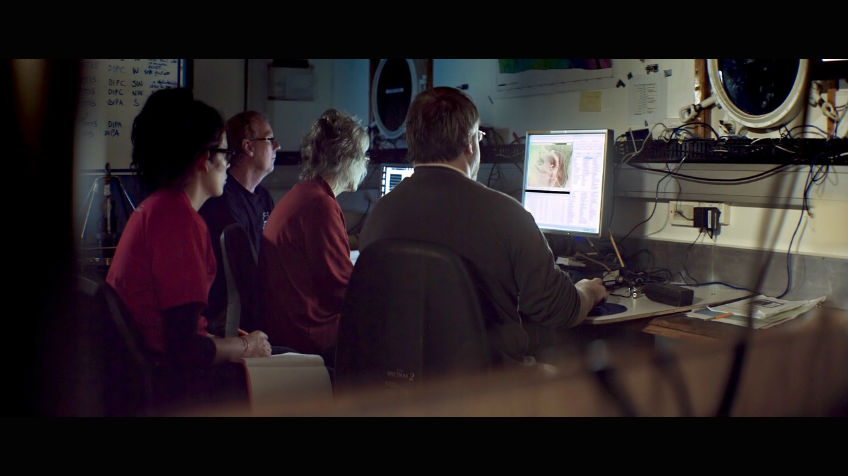
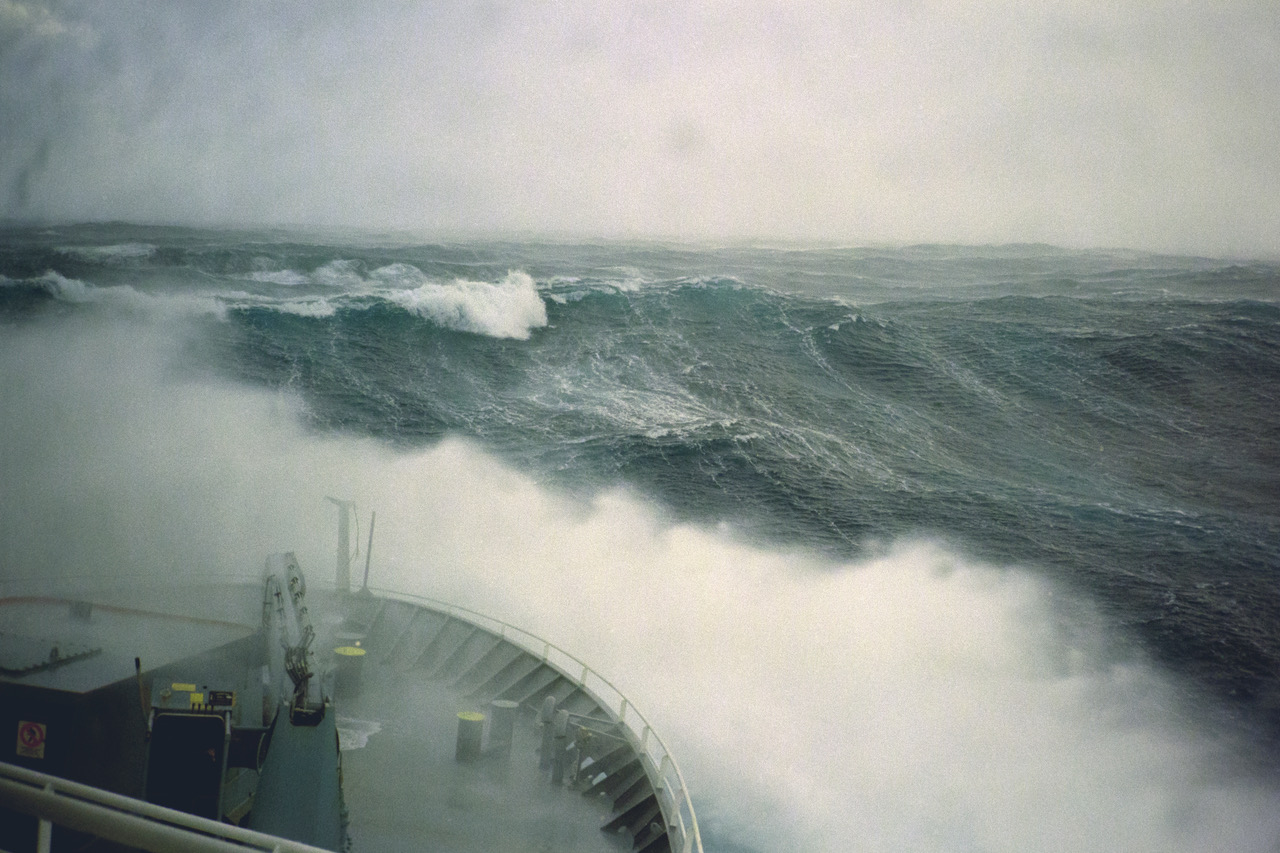
For deep-sea coral scientist Di Tracey, the landscape is the seabed of the Chatham Rise which has been impacted by commercial fishing over many years. Her team of scientists aboard the research vessel Tangaroa are surveying sea mounts which comprise the primary habitat of many deep sea corals. The film takes in her documentation of the impacts left by deep ocean trawl fishing, her search for intact habitats, and her scientific inquiry of the association of species within these habitats. Di’s journey in the film concludes surveying massive colonies of the habitat forming stony coral species Solenosmila variabilis on an unfished seamount.
For sound artist Bruce Russell, the landscape is the CBD of Christchurch city. The city was struck by a series of major earthquakes in 2012 and was left in ruins. As the city undergoes the initial stages of civic reconstruction, Bruce Russell creates an experimental audio acoustic improvisation that meditates on notions of civil society, renaissance natural philosophy and urbanisation. Through a process of unruly and anarchic methods, Russell’s work suggests a philosophical ground zero, a moment of deliberation before starting over. His journey in the film is concluded by the resolution of his new improvised sound work No Mean City.
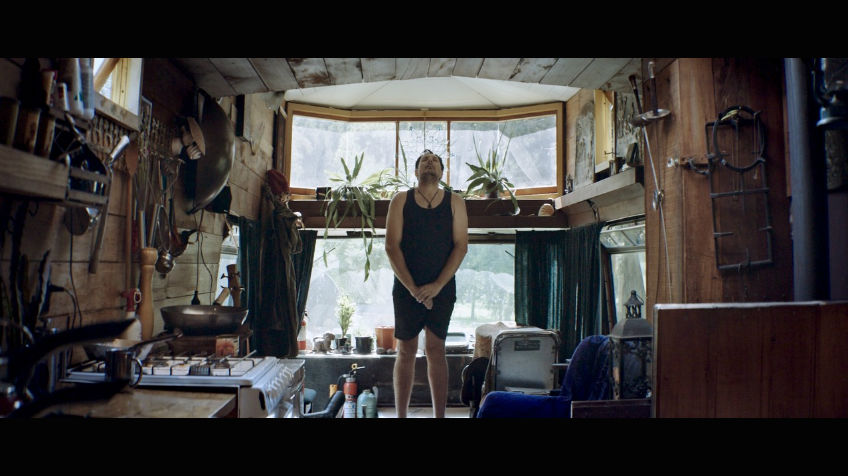
For poet and actor David Hornblow, the landscape is an internal terrain explored through Regression Hypnotherapy. Hornblow represents an apocryphal character in the film who initially began as a collage of transcripts from emotional therapy sessions about addiction; a recovering addict, estranged from his children and struggling to cope with a mesh of anxieties about the outside world. David’s own experiences with addiction have lead him along a path that find him now in the role of drug and alcohol counsellor at the Waipareira Trust in Auckland, New Zealand. His experiences and insights provided a canvas of personal histories to feed into the character. During production David was put under hypnosis and underwent ‘life regression’ hypnotherapy. The resulting material became the basis for a series of cinematic excavations of personal histories; isolation, failure, disorientation and addiction. David’s journey in the film is concluded with a utopian cleansing-by-fire ritual which takes place in the depths of his subconscious.
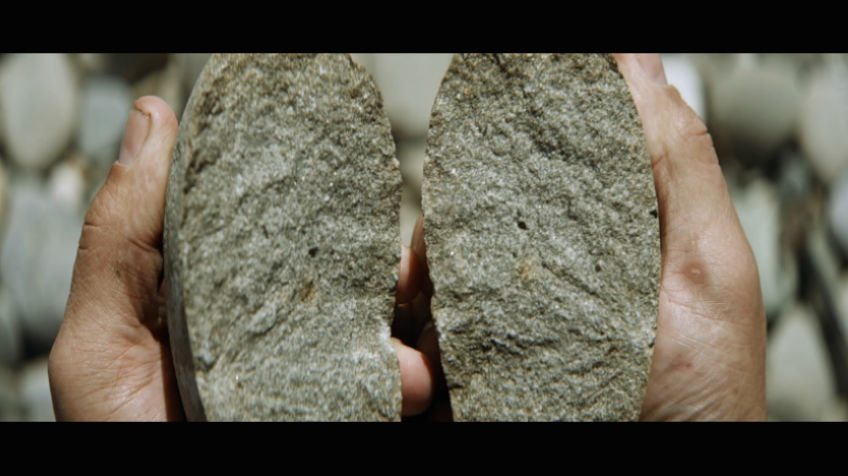
The explorations of our characters are woven together in a uniquely cinematic journey. A composite view of the anthropecene viewed through the prisms of scientific, artistic, and esoteric practices. A survey of environmental, civic and personal damage that ultimately arrives at a revelatory filmic alchemy. The process of making the film has been a rich creative journey in which we as filmmakers have explored the parameters of documentary. It has sharpened our awareness of being humans, on the planet, engaged with obscure activities that are scarcely more evolved than cavemen banging stones together thousands of years ago in our earliest efforts to comprehend our place in the world. The film has been our own encounter the unknown, and our landscape is the ritualised, utopian space of the cinema: a dream theatre of projections, ideas, emotions and nightmares.
-
 Summer AgnewMinginui (2005)
On an Unknown Beach documents three different characters who each explore unique landscapes of ruin.
For deep-sea coral scientist Di Tracey, the landscape is the seabed of the Chatham Rise which has been impacted by commercial fishing over many years. Her team of scientists aboard the research vessel Tangaroa are surveying sea mounts which comprise the primary habitat of many deep sea corals. The film takes in her documentation of the impacts left by deep ocean trawl fishing, her search for intact habitats, and her scientific inquiry of the association of species within these habitats. Di’s journey in the film concludes surveying massive colonies of the habitat forming stony coral species Solenosmila variabilis on an unfished seamount.
For sound artist Bruce Russell, the landscape is the CBD of Christchurch city. The city was struck by a series of major earthquakes in 2012 and was left in ruins. As the city undergoes the initial stages of civic reconstruction, Bruce Russell creates an experimental audio acoustic improvisation that meditates on notions of civil society, renaissance natural philosophy and urbanisation. Through a process of unruly and anarchic methods, Russell’s work suggests a philosophical ground zero, a moment of deliberation before starting over. His journey in the film is concluded by the resolution of his new improvised sound work No Mean City.
For poet and actor David Hornblow, the landscape is an internal terrain explored through Regression Hypnotherapy. Hornblow represents an apocryphal character in the film who initially began as a collage of transcripts from emotional therapy sessions about addiction; a recovering addict, estranged from his children and struggling to cope with a mesh of anxieties about the outside world. David’s own experiences with addiction have lead him along a path that find him now in the role of drug and alcohol counsellor at the Waipareira Trust in Auckland, New Zealand. His experiences and insights provided a canvas of personal histories to feed into the character. During production David was put under hypnosis and underwent ‘life regression’ hypnotherapy. The resulting material became the basis for a series of cinematic excavations of personal histories; isolation, failure, disorientation and addiction. David’s journey in the film is concluded with a utopian cleansing-by-fire ritual which takes place in the depths of his subconscious.
The explorations of our characters are woven together in a uniquely cinematic journey. A composite view of the anthropecene viewed through the prisms of scientific, artistic, and esoteric practices. A survey of environmental, civic and personal damage that ultimately arrives at a revelatory filmic alchemy. The process of making the film has been a rich creative journey in which we as filmmakers have explored the parameters of documentary. It has sharpened our awareness of being humans, on the planet, engaged with obscure activities that are scarcely more evolved than cavemen banging stones together thousands of years ago in our earliest efforts to comprehend our place in the world. The film has been our own encounter the unknown, and our landscape is the ritualised, utopian space of the cinema: a dream theatre of projections, ideas, emotions and nightmares.
Review
The deep sea devastated by rash poaching, the city center destroyed by an earthquake, the inner side of a damaged human being – these are all places 'unknown' to its exterior. There are three explorers (a scientist, a noise musician, a poet and actor) who continuously research the coral reef, sounds, and human psychology in these rugged and desolate spaces. This documentary addresses the three explorers and their spaces. Though the explorers do not actually meet, they connect and bear an extended relationship to each other throughout the film. The audiovisual sense and editing of the film enables this subtle connection and extention, allowing the spectator to sensually experience the explorers’ conditions (the subjective depth perception, space perception). Their worries, philosophy, and imagery are either sensually portrayed or composed as a performance through the combination of meticulously built image and sound by the camera movement, framing, the use of lenses, sound, and the length of shots. This is why the area of activity, emotions, worries, and thoughts of the disparate explorers can connect to each other through the audiovisual images and imagination without a sense of difference. The part worthy of close observation is the transitions constructed by creative editing and sensual effect of association in this film packed of aesthetic accomplishments. Eventually, this documentary gives an impression of a sensuous performance-a collaboration of shooting, sound, and nature. [Kim Sook-Hyun]
Credits
- Director, Cinematographer Adam Luxton, Summer Agnew
- Producer Gayle Hogan, Adam Luxton, Summer Agnew
- Editor Adam Luxton
- Music Bruce Russell, Alastair Galbraith
- Sound Max Scott
Contribution & World Sales
- Contribution & World Sales Adam Luxton
- E-Mail adamluxton@gmail.com