
국제경쟁
대상 (흰기러기상)
Homeland (Iraq Year Zero)
- Iraq/France
- 2015
- 334min
- DCP
- Color
Synopsis
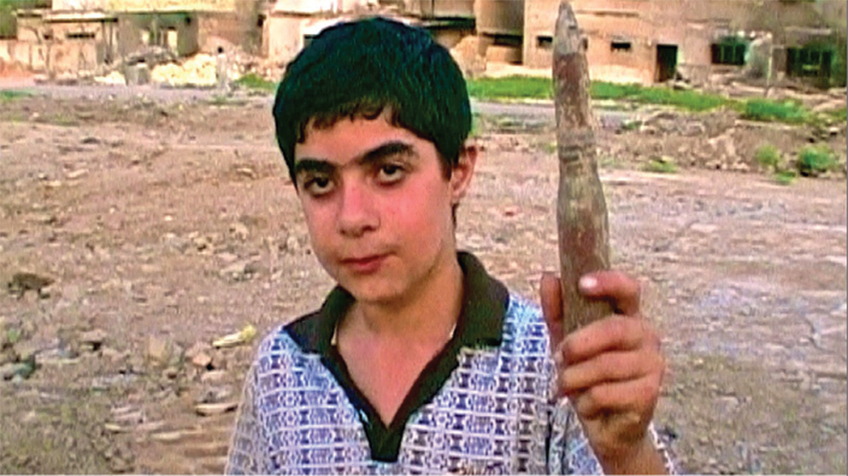
One may expect a new adventure story from this film, which chronicles two years in the life of an Iraqi family, before and after the George W. BUSH administration invaded Iraq in 2003. However, the adventure story that we find is neither the Odyssey nor Scheherazade's tale. Rather, it could be described as an apocalyptic chronicle of modern times. In the portrayal of the director’s family and friends as well as their everyday life in Baghdad and nearby cities, we witness the violence inflicted upon them by US missiles that were designed to bring down Saddam HUSSEIN. Furthermore, the film sheds light on the suffering of Iraq and its people brought on by the image of ‘the axis of evil’. Perhaps the running time of 5 hours and 30 minutes and the subtitle ‘Fall and Battle’ are not enough to convey such an apocalyptic discourse. Nevertheless, this documentary reminds us of a ‘symphony of death’. When Haidar, Abbas FAHDEL’s 12-year-old nephew, talks about his fear and expectations of the war, we are already aware of his impending death soon after the American invasion. The images of everyday life disappear bit by bit as if they are dying out and withdraw into silence like majestic views of historical sites. The film seems to be a hymn set at slow adagio tempo. Not only does it examine the power of turmoil encountering neo-realism, but it also sensuously proves Alain RobbeGrillet’s argument that ‘reality escapes significance and shows only their lives and deaths’. It is for this reason that Haidar reminds us of R. Rossellini’s Edmund. (JEON Sung-kwon)
Director
-
 Abbas FAHDEL
Homeland (Iraq Year Zero) (2014)
Dawn of the World (2008)
We Iraqis (2004)
Back to Babylon (2002)
심사위원 특별상
Twenty Eight Nights and a Poem
- Lebanon/France
- 2015
- 105min
- DCP
- Color

Synopsis
Twenty Eight Nights and a Poem puts an old photo studio in the coastal city of Saida, located in Southwestern Lebanon, in the center of the film, reconstructing the history of the area in a unique way. Since photographer Hashem el Madani opened a photo studio called ‘Shehrazade’ in 1957, he has preserved various cameras and recorders as well as the images and sounds recorded by these devices. That is to say, the studio is not a simple photo studio but a museum having various photographic devices and an archive having images and sounds. Recomposing these materials, its filmmaker Akram ZAATARI made a kind of archaeological film essay. The main elements of this film essay are subtitles providing a lot of information, evidence of the photographer Mandni, and images and sounds reproduced in various formats. Besides the materials in the studio, by adding videos on YouTube, the filmmaker created an interesting cultural micro-history. For instance, 28 photos of the film reveal the secret sexual identifies of locals and a subtle social and political influence on them in an interesting way. The result of the micro-historical exploration is interesting too, but above all, this work stands out in the delicate composition that allows the viewer to naturally see the technological development of film and its influence on culture. (BYUN Sung-chan)
Director
-
 Akram ZAATARITwenty Eight Nights and a Poem (2015)
Letter to a Refusing Pilot (2013)
Tomorrow Everything Will Be Alright (2010)
The 8 (2009) How
I Love You (2002)
아시아 경쟁
아시아의 시선상
-1287
- Japan
- 2014
- 70min
- DCP
- Color
Synopsis
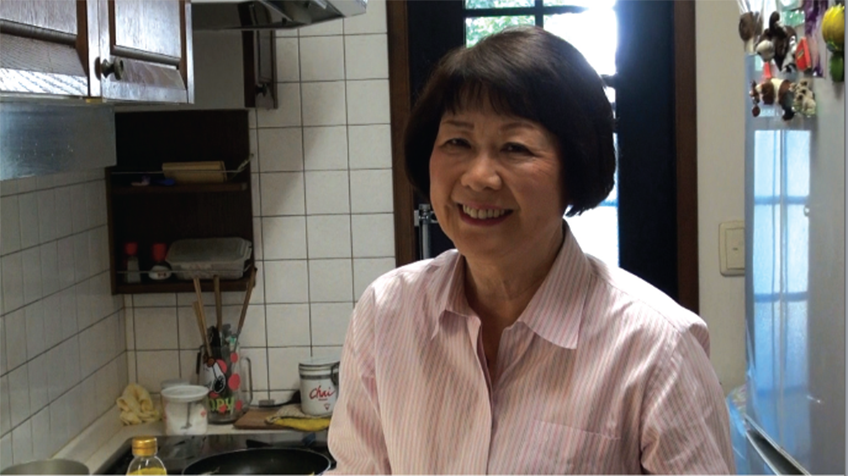
Aside from a few seconds in which the director appears briefly onscreen, only a single person is depicted in this film. On the beach, and in a small kitchen as she tells her story, we are at first unable to guess the meaning of the film’s title. Even as she sits formally in front of the camera speaking, dressed in clothes of pretty colors, with a nervous expression, telling us of how she contracted breast cancer 12 years ago, turned down surgery to extend her life, and is currently awaiting death, the significance of that number eludes us. But not long after the film starts, when the number -168 is shown, and we see her appearing to grow weaker, we know with certainty what the number means. Together, we are approaching the D-day of her death, and we must endure that time watching as her death comes inexorably closer. 100 days, 40 days, 17 days, 8 days... at a rapid pace the film advances towards her death. Her hair, which had been elegantly kept, gradually turns white, and finding it difficult to breathe without a respirator, she sometimes seems to lose consciousness. She looks back on her life, saying if she could travel back, she would want to go back to age 40, and the fact of her approaching death remains unchanged. Having feared death, or the pain that accompanies death, she appears to start acknowledging it, or accepting it. Watching the death of this woman, who is neither extraordinary nor ordinary, causes all of us to imagine our own death, which is approaching one footstep at a time. As for our own D-day, which none of us can possibly imagine, but which will ultimately reach us, how many days remain? (PARK Hye-mi)
Director
-
 Ian Thomas ASH
-1287 (2014)
A2-B-C (2013)
In the Grey Zone (2012)
Jake, Not Finished Yet (2010)
The Ballad of Vicki and Jake (2005)
한국경쟁
최우수상
The Letter
- Korea
- 2014
- 16min
- DCP
- Color
Synopsis
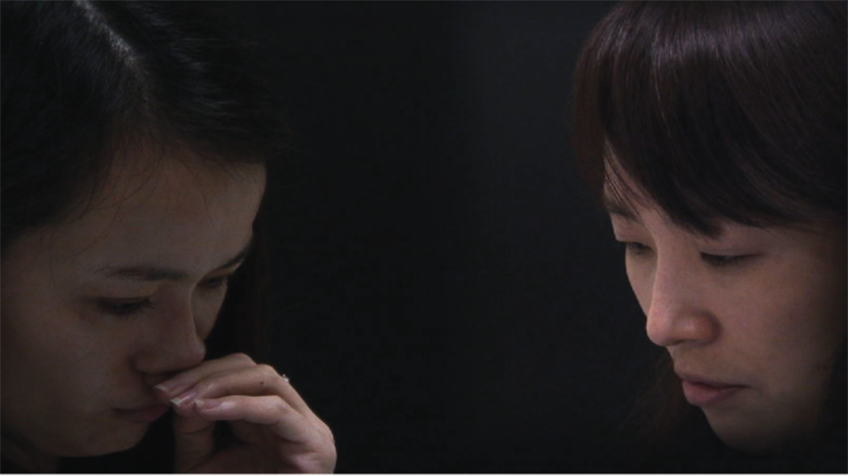
The Letter could be viewed as a video act that demonstrates the powerful impact of tautology, the potential narrative of a text, and the performative reenactment of recitation. The fixed frame is split into two images, each focusing on the other’s perspective while the text is being read out loud. In time, the narrative is re-arranged through the act of translating the text, which seems to transition into the ways in which the unity of the narration and the narrators’ act of performing collapses. The original and translated languages overlap and cross each other. The film is then left with voices as the images slowly disappear. By having a third party read the letter written by a 19-year-old immigrant woman, the director seems to accept the voice as metonymy of the body. By producing the voice itself as a cinematic structure, the film illustrates the symptoms of violence taking place today. The Letter commemorates the death of an immigrant woman. (JEON Sung-kwon)
Director
-
 LEE Hyun-jung편지 The Letter (2014)
심사위원 특별상
Troublers
- Korea
- 2015
- 100min
- DCP
- Color
Synopsis
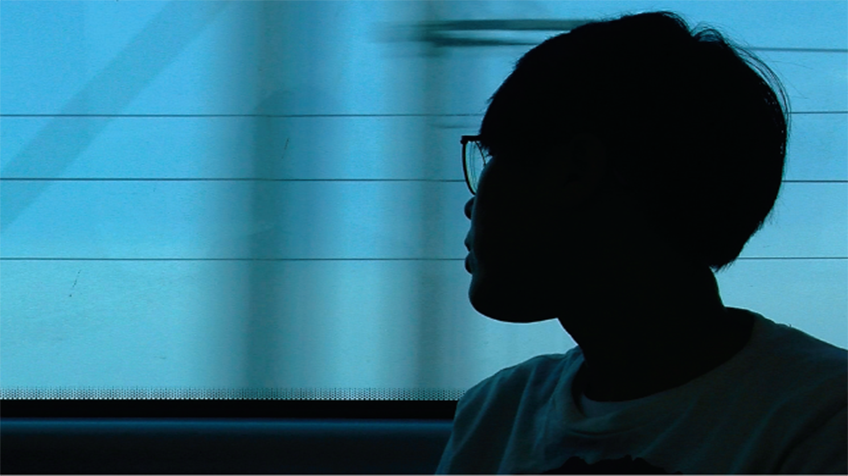
LEE Young, a documentary filmmaker and openly lesbian, encounters basissi (butch lesbian) LEE Muk while researching earlier generation of lesbians in South Korea. LEE Muk, living with friendly neighbors in her hometown, reflects with equanimity on her past days when gathering lesbian people was forbidden. Has the hatred she has had to deal with lessened now after dozens of years have passed? Seoul captured with the director’s camera on the day she met LEE Muk is full of hate speeches, as if mocking my absurd question. People who are hateful and racial in South Korea want to eradicate the activists for social minority and LGBT people with labeling them as “Pro-North Koreans” and as “licentious.” When the director LEE Young meets the lesbian couple Non and Ten, who made their coming out decision after suffering the 3.11 tsunami, she realizes how unsecure and unsafe the life of social minority, including lesbians, can become especially when confronting an enormous disaster. Hatred prevailing Seoul does not miss the families of Sewol-ho. To people of hateful speech and practices, even the families who publicly express grief for their loss of children is considered only as a trouble that destroys national security. While watching the “hatred people” acting insane and spatting curses in Seoul where the targets of hate crime are growing wider, from LGBT people to common people with reasonable criticism, we have to ask, finally, who is the real trouble? (LEE Young-ju)
Director
-
 LEE Young불온한 당신 Troublers (2015) OUT (2007)
이반검열 Lesbian Censorship In School 1 (2005)
거북이 시스터즈 Turtle Sisters (2002)
용감한 기러기상
Thirty-four, On the Road
- Korea
- 2015
- 84min
- DCP
- Color

Synopsis
MOON Ae-rin and JUNG Jin-hee, who met as lecturer and student at a writing club for disabled women, Iyagi jogakbo, are friends of the same age (34 years old). Ae-rin, an activist of Nodeul Yahak, is also disabled and a passionate fighter at the demonstrations, but in her daily life, she is shy and finds it difficult to show her feelings and thoughts to others. Meanwhile, Jin-hee, who had resided at a residential care facility since she was 12 and has just started living outside of the facility, dreams of her own independent life, but the world is tough and challenging to the severely disabled like her. The routine as an activist burdens and isolates Ae-rin, and Jin-hee dreams to marry a loved one before it is too late. We don’t need to see their life as special ones; what they are troubling with in their life will resonate with women of their age, women at thirty-four, on the road. (LEE Young-ju)
Director
-
 LEE Sun-hee서른 넷, 길 위에서 Thirty-four, on the road (2015)
-
 KIM Byung-chul서른넷, 길위에서 Thirty-four, on the road (2015)
관객상
Red Maria 2
- Korea
- 2015
- 120min
- DCP
- Color

Synopsis
At the end of her earlier work Redmaria, filmmaker Kyung Sun said that our society was not yet prepared to accept the tales of sex workers. Her recent work Redmaria 2 is a film that hears their stories in earnest and suggests that it has become time for our society to give an ear to their stories. For the film, the filmmaker heard the stories of sex workers and the words of Korean and Japanese researchers who claimed that the issue of military sexual slavery needed to be accessed from a new viewpoint, and then wove the two stories together in the film using a crosscutting technique. This crosscutting may be a cinematic device suggesting that it is time for us to overcome the border/discrimination between Korean women and Japanese women, and forced sexual slaves and prostitutes. Isn’t the image of military sexual slaves as innocent women (an image that is fixed in Korean society for military sexual slaves) a device that makes someone excluded from the area of the victims and that deprives them of their qualification and right to tell their pain? Isn’t it basically the same as a device that blocks the appeal of sex workers for their qualifications and rights from reaching the concern of our society? To break away from the ideology of patriarchy’s chastity that makes someone’s pain not be heard, Redmaria 2 above all suggests us to listen to all members of society with an open mind. (BYUN Sung-chan)
Director
-
 Kyung Soon레드마리아2 Red Maria 2 (2015)
레드마리아 Red Maria (2011)
쇼킹패밀리 Shocking Family (2006)
사람은 무엇으로 사는가 What Do People Live For (2003)
애국자게임 Patriot Game (2001)
민들레 Mindullae (1999)
청소년 경쟁
최우수상
We Didn’t Start the Fire
- Korea
- 2014
- 12min
- DCP
- Color
Synopsis
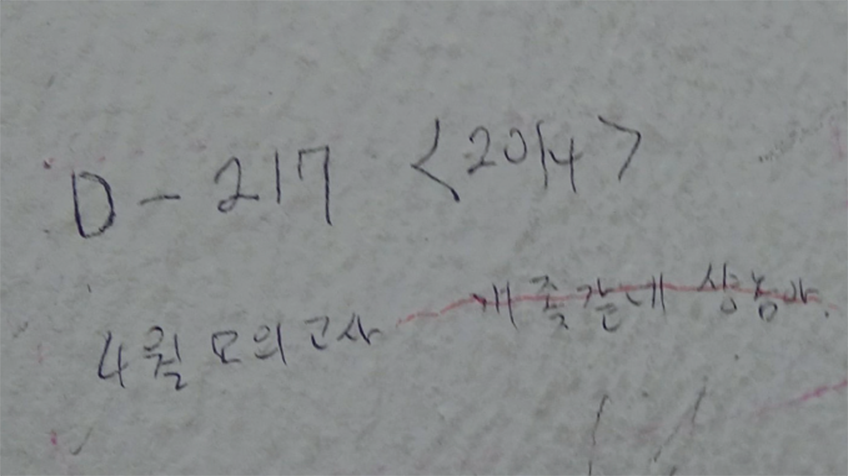
We Didn’t Start the Fire is a raw depiction of the current state of score high-in-the-pointless-studies Korean education system. At first, the camera portrays unhappy students who are miserable living in a competitive society that only values their GPA and CSAT scores. The camera follows a student home to show studying is tough for everyone. Worried about her daughter’s scores, a mom explains the importance of the college entrance exam to her daughter who is tired of studying. The mom says in order to live a comfortable live, the daughter needs to get a good score and attend a good university. The daughter listens to the mother’s point of view and fully understands her. However, trying to understand reality is suffocating.
Studying for the college entrance exams is contradictory for the daughter to accept. This story about high school seniors who are suffering from the college entrance competition reflects the tribulations of all high school seniors. If the reality of taking a test to get a full-time job at a regular company is just as difficult as the public servant exam, then the students are voluntarily choosing to study to become a public servant. Living in a competitive society, the students cannot help but study for another entrance exam. We Didn’t Start the Fire asks our society whether or not we are the ones who are forcing the students into competition. (SEONG Da-eun)
Director
-
 HONG Da-ye시발. We Didn’t Start the Fire (2014)
18 18 (2013)
우수상
599.4km
- Korea
- 2015
- 6min
- DCP
- Color
Synopsis
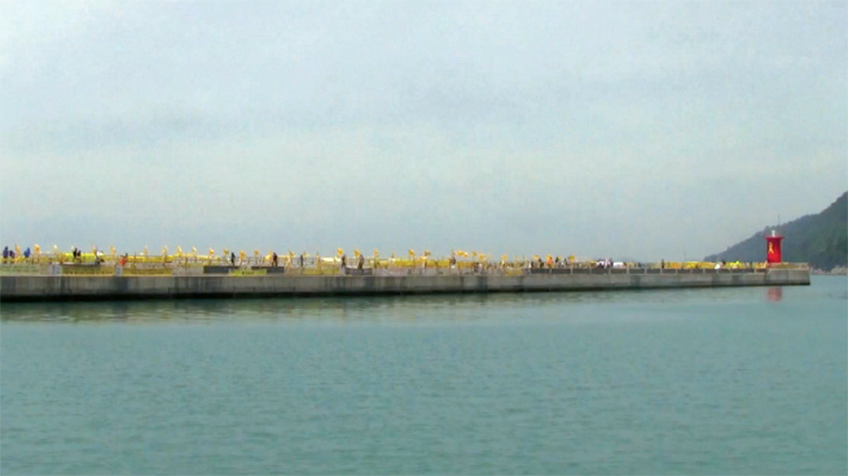
Last April, when the entire nation was in mourning due to the sinking of the Sewol Ferry the media was consumed with which media outlet can write more provocative articles. Before long, the media reported the incident as a political issue and later dismissed it as a mere accident. The media even went on to criticize the victim’s family members for ‘overreacting’ to the catastrophe. In the world of instant media consumption, majority of the adult citizens bickered and blamed the people at fault during the Sewol Ferry disaster. As time went by, people ignored the tragedy all together. In this film, the director recounts how ‘Families of the Sewol Ferry victims were more scared of people than the police.’ He mentions he first thought about ‘death’ when his grandmother passed away, and it took a very long time for him to process her absence and feel sorrow. Therefore, he can relate to the families who lost a loved one in the Sewol Ferry. He also says he was scared that the society prevented people from showing sadness. The portrayal of the director who bravely admits that he naturally showed his emotions but became afraid when he was becoming emotionless like the adults allows us to realize that sincerity based on sympathy is a virtue.
This courageous confession sends a lasting message. (SEONG Da-eun)
Director
-
 KIM Myo-in