
국제경쟁
대상 (흰기러기상)
Let’s Dance
- Korea
- 2013
- 81min
- HD
- Color
Synopsis
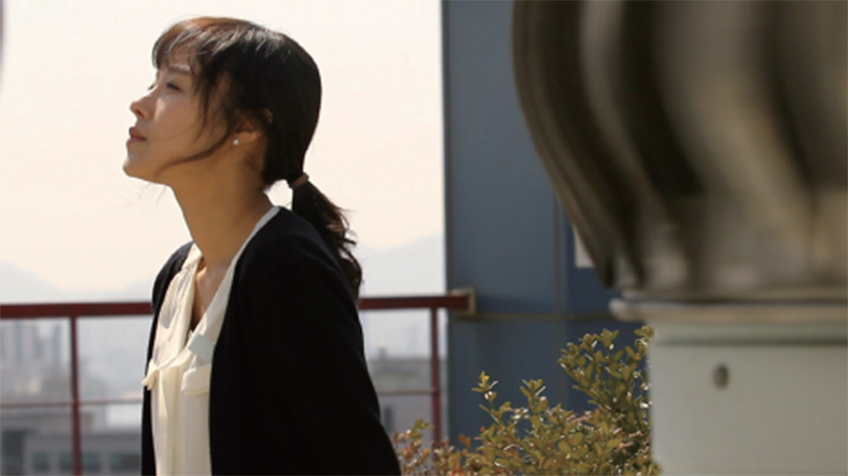
After lming Variety Survival Talkshow which had victims of sexual violence stand in front of a camera in order to console and sympathize with them, JO Se-young again challenges a taboo subject. The matter that the system and law of Korea denies although it is overtly prevalent, the religious world strictly condemns by its bioethical principal, that is, abortion. While the lm makes women who have endured wounds of abortion engraved both in their body and heart, remember and call attention to their memories again, Let’s Dance socializes this extremely private matter. The conservative and traditional frame stands rm against abortion. Premarital pregnancy has branded scarlet letters on women and a result that would be rarely accepted even in ordinary sex life has always been left only to women. Abortion has been a secret of women that has never been spoken to anyone and left as one’s own problem in private agony. In its position between revealing a heavy issue and protecting interviewees, the camera strategically takes both drama and documentary form. In documentary parts, we can directly hear from the women. It is the moment of numerous violence tangled within them and lost wounds within their body speaking. Meanwhile interviewees disclose their faces to resist with subjectivity against violence committed to women beyond rules and ethics. During the process of accepting their memories that were once denied, the interview for the lm becomes a performative tunnel. The camera wants to support their courage thoughtfully. Drama parts, on the other hand, are faithfully reenacted based on interviews with real women and the sequence conveys a process of an unmarried woman’s love, pregnancy and abortion focusing on her psychological anxiety and panic during her own experience going through her own body. After having an abortion, women have had to recover their body with a bowl of beef-bone soup. But now Let’s Dance suggests them to dance and announce freedom to everything that has imprisoned women. Co-directed by feminist directors, the process of lming is also worth paying attention to. (KIM Dong-hyun)
Director
-
 JO Se-youngWorked as Assistant Director for Words Kept In A Stone. Directed Made in Korea: International Adoptions and Variety Survival Talkshow. Let’s Dance is her latest documentary.
<자, 이제 댄스타임> Let’s Dance (2013)
<버라이어티 생존토크쇼> Variety Survival Talkshow (2009)
<메이드 인 한국인- 해외입양을 말하다>
Made in Korea - International Adoptions (2005)
심사위원 특별상
The Ghosts in Our Machine
- Canada
- 2013
- 92min
- HD
- Color

Synopsis
The Ghost in Our Machine discloses the tragic conditions burdened by a number of animals in the environment of modern urban life, and at the same time raises questions of fundamental ethical problems that lie between the relations of humans and non-human animals. The film follows a one-year journey of photographer Jo-Anne McARTHUR, who travels around the First World (North America and Europe) and takes pictures of animals. Within modern industrial society, animals have become “objects” that are guaranteed survival only when they satisfy the needs of humans, that being medical experiments, food, clothing, entertainment, etc. In a sense, they have become more humbled than mere “objects” because survival is also a process of endless suffering to animals that also have senses and souls. The Ghost in Our Machine pleads for the urgency of animal liberation through two cinematic methods. Firstly, there are the diverse expressions captured through close-up shots of their faces. Here, the animals are mostly those locked in the spaces hidden from modern urbanites including medical labs, farms or slaughterhouses. The close-up shots are disclosive holding dual meanings, in that the images bring us into these invisible places (some of these shots have been taken at great risk). Urbanites who readily enjoy the final outcomes or products from these places are often unaware of what happens during these processes and that these animals show very humane facial expressions. The second cinematic method is to compare the animals’ expressions with those of animals in different environments including the animal relief station near New York City and alternative animal farms. Looking at the rich expressions and natural movements of those animals, the audience may begin to take the animals they usually encounter in city zoos as somewhat unfamiliar and unnatural. (BYUN Sung-chan)
Director
-
 Liz MARSHALLLiz MARSHALL is an auteur filmmaker who fuses cinematic storytelling with social and environmental justice issues. Directed Water on the Table, The Ghost in Our Machine. She is well versed in the craft of visual, conceptual and social-issue storytelling having worked as a director, writer, producer videographer, cinematographer and photographer since 1994.
The Ghosts in Our Machine (2013)
Water on the Table (2010)
Girls of Latitude (2008)
The Rawside of ... The Bourbon Tabernacle Choir (2008)
Inside Your Threads (2004)
한국경쟁
최우수 한국 다큐멘터리 상
Sanda
- Korea
- 2013
- 93min
- HD
- Color
Synopsis
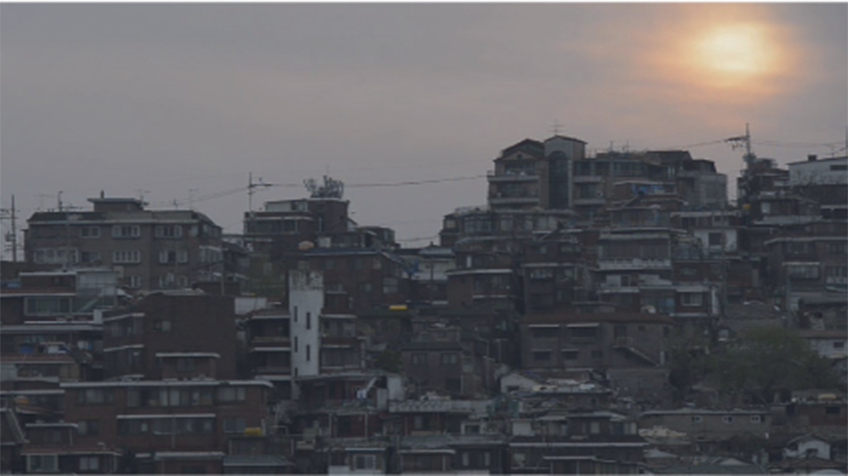
A documentary about the full time and permanent employees of a large conglomerate, when becoming a ‘regular worker’ has become everyone’s aim in life. Considering the outpouring of films dealing with the survival of irregular workers, I was a bit worried watching this film. However, I found their reality as regular workers even more desperate than I had imagined. This film is about the permanent employees of KT in their 50s, a company that was established as Korean Telecommunication Authority in 1981 before being privatized in 2002, after which it appeared more in the society and political sections of newspapers than in their economic section for their controversial employee policies. The stress that these employees experience from employment instability and pressure of layoff is unimaginable. And at the top of this “hit list” are employees who criticize these policies or engage in union activities. As punishment, they get transferred to remote branches that take 5 to 6 hours to commute or forced to repair telephone cables. In the case of one female office worker in her 50s, she had to climb up a telephone pole to fix the cables. All this is part of KT’s “Kick Out Program” done under the pretext of disciplinary action but really dismissal. By 2003, through this “Abuse and Dismissal Program” (expression of Democratic Party lawmaker EUN Sumi), KT had made 5,500 workers redundant and, by 2009, that had included another 5,990, making it notorious for having the largest layoff rate among all Korean companies. Not only that, with the death of 270 workers from suicide, sudden collapse, and overwork, KT became even known as the “Company of Death.” The workers who star in this film are people who refuse to “live to work” ― that is, erase all their thoughts and feelings in order to live as “KT men.” Instead, they are people who choose to “work in order to live.” In far away places cut off from their families and ignored by their colleagues, they try to adapt to rural life by engaging in new hobbies or starting a new union but it is not easy to withstand the continuous threat of layoff. And yet, they continue to take a firm stand remembering their past deeds that give them the pride and the will to continue living and resisting. (Billy CHOI)
Director
-
 KIM Mi-reSince 2000, she has worked on documentary films. She directed NoGaDa, Staying Out and Shall We Dance?. NoGaDa was invited to the Fribourg International Film Festival in Switzerland and awarded the Human Rights Film of the Year at the Seoul Human Rights Film Festival. Staying Out, which won the Best Documentary Award at Women Filmmakers’ Festival, was screened at the Women’s International Film Festival in Chennai, India and at the Yamagata International Documentary Film Festival in Japan.
<산다> Sanda (2013)
<함께 춤출래요?> Shall We Dance? (2012)
<외박> Weabak (2009)
<노가다> NoGaDa (2005)
<노동자다 아니다> We Are Workers or Not? (2003)
관객상
The Basement Satellite
- Korea
- 2013
- 110min
- HD
- Color
Synopsis
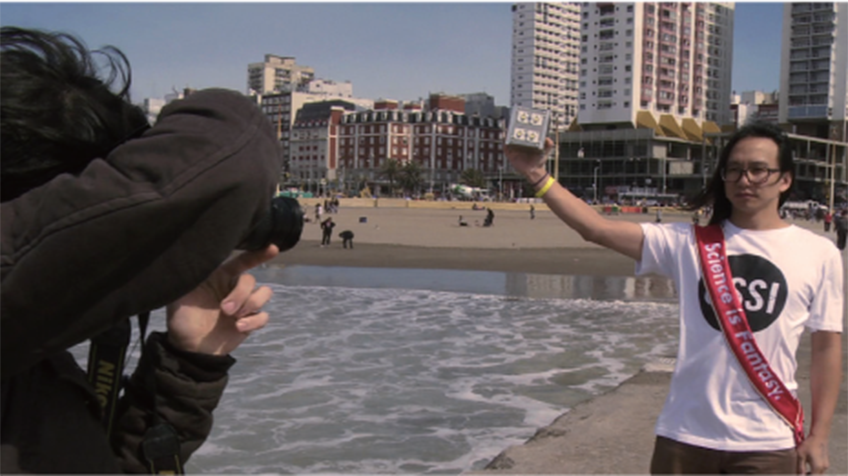
OSSI (Open Source Satellite Initiative) means, in simple language, that you try to launch your own satellite into space through open satellite manufacturing technology. Media artist, SONG Ho-jun is busy fullling his absurd plan, and the camera follows his preposterous project with affectionate eyes. The Basement Satellite is a documentary lm about the personal satellite launching project by SONG Ho-jun who is called a freak, a nutcase and a dreamer. But as the lm progresses, you cannot be sure whether the main character is SONG’s dream or the process of a personal satellite launch, or a cute confession of love toward an escapade. In the beginning, it seems to start seriously with the footages of news and newspapers of SONG. But as it shows the details of his plan little by little, it gets confusing more and more whether it is science or a performance art. When he considers the situation of the satellite’s explosion using various technical terms, he looks innitely serious. But watching him who signs a contract with a French company for its rst satellite launch, then later raises one hundred million KRW for the production cost by selling ten thousands T-shirts, we just couldn’t help but smile at the rush of a clueless optimist. If the lm has come this far, it drives the audiences who have followed the development of the story to ask a question. Why should he launch the satellite to space in the rst place? The Basement Satellite takes the form of the in-depth reporting of SONG Ho-jun thoroughly. The director might have wanted to capture a dreamer’s back breaking for his dream instead of telling a melodramatic story of a man. To ask him why he wants to launch the satellite is the same as asking people why they would climb a mountain. It is just the territory of justied act for him and his blind passion is transmitted to the audiences before they know it. Does the dream come true? Actually, it is not that important. His pure selsh purpose, the challenge for the challenge without any desire through his goal. The uselessness is lovely and every step of his adventure is fun. (SONG Kyung-won)
Director
-
 KIM Hyoung-juAfter completing his undergraduate and graduate work at Korea National University of Arts, KIM Hyoung-ju built his career as a cinematographer. He worked on feature lms Pruning the Grapevine directed by MIN Byung-hoon, She Came From by KIM Sung-ho, A Reason to Live by LEE Jung-hyang and the documentary lm Talking Architecture by JUNG Jae-eun. The Basement Satellite is his debut lm as a director.
<망원동 인공위성> The Basement Satellite (2013)
청소년경쟁
최우수 청소년 다큐멘터리상
Because You Are My Mother
- Korea
- 2012
- 30min
- HDV
- Color
Synopsis
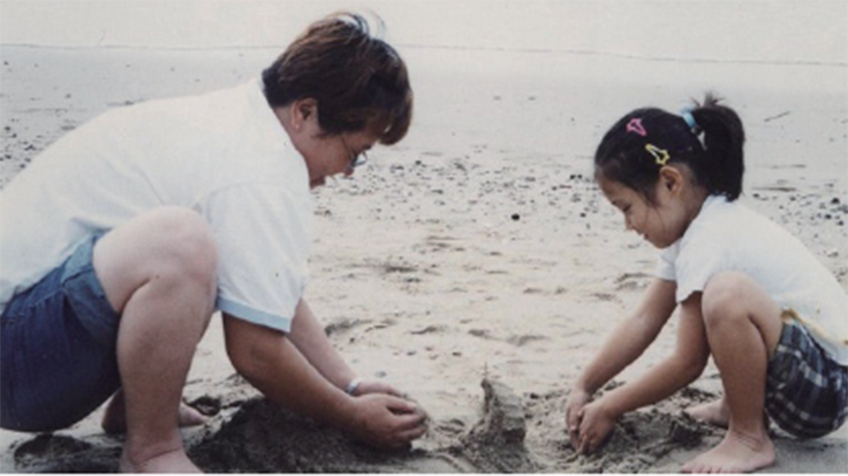
Daughter provokes her mother for no particular reason. She is not able to explain logically why she is so upset with her mother and even to herself. The film seems to be her journey to find the reason of her irritation, presented in opening scenes of the film. The daughter visits her maternal grandmother who raised her instead of her own mother, meets her mother’s friends and her divorced father to ask about her past and her mother’s past. Her mother’s past is quiet tough. She met a man during a labor movement and married him without love. Eventually they got divorced and she came to Seoul to earn money. Mother says, in a somewhat cold manner, that it was an inevitable decision. She doesn’t make a hasty apology or present a sense of guilt. She says she is sorry but then again, it is their lives. The daughter understands. They are right. That is life. There are times to make unavoidable choices and after all, that’s no one’s fault. Thus knowing the facts is all she can do. However the daughter confesses that she is hurt because of mother. I feel so sad. I’d like to show this film to not only teenagers but also grown-ups, especially those who have lived their life to the full. You will see that it’s not to hold them responsible. The daughter resembles her mother. She is brave, reasonable and knows how to solve problems to such an extent as to film herself. Just like her mother did to her friends, the daughter seats her friends beside her. However, she is different from her mother. Because she completed this film. She has already made her own mirror to reflect herself since her teens. Now, she doesn’t have to depend on her mother. She doesn’t need to wait for her nor blame her. She can start her own life. Way to go! (AHN Seul-ki)
Director
-
 OH Hae-riAfter graduating from junior high school, She entered an alternative school, ‘Roadschola’, in Seoul. Because of this great school, she traveled and met various people. That was an opportunity for her to make the film about the conflict between mother and her, Because You Are My Mother.
콩가루모녀 Because You Are My Mother (2013)
우수 청소년 다큐멘터리상
A School of Hope
- Korea
- 2013
- 38min
- HD
- Color
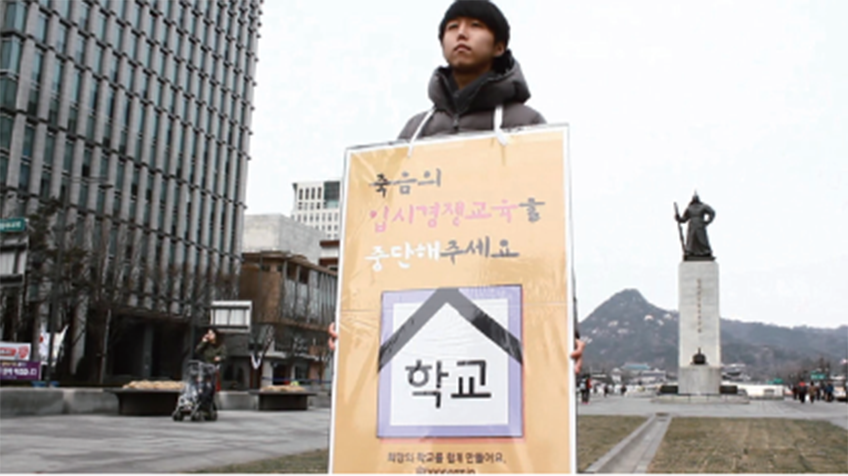
Synopsis
February 2012, Choi Hun-min starts a one-man protest at Kwanghwamun Square, to try and stop the brutal educational system for college admission. Right after that, nearly 70 students who agree with him join together and get ready to establish a ‘School of Hope’. These students wanted to escape the inhuman and uninstructive educational system, which resulted from the society that put emphasis on people’s educational background. Institutional schools have been long to fall into cram schools for the exploitive and brutal competitions. The wounds and claims of students’ who are victims of the brutal educational system in institution, doubts on some alternative schools getting similar to the system, the denial of CSAT(College Scholastic Ability Test), etc. become the frame of ‘School of Hope’. Discords appear in the course of the establishment, although it started with the dream of providing a ground of true learning - “of, by, and for students”. The following questions arise during the establishment: “Is the school responsible for the students?” “What does being a student mean?” “what standards do we have to follow for the curriculums?” and “How do we define a ‘true’ school?” The weight of these questions is quite huge and respective realities and ideals of theirs are confronted with one another. This film shows these troubles and labors as they are. It is the gap between reality and ideal, the moment when individuals’ desires face one another, and the fact of living together in the imperfect world, which are not the problems only for the ‘School of Hope’. But this whole course of confrontation and conflict can be a real learning process and the course of seeking out the answers of the questions above can be the moment that the ‘School of Hope’ needs to face. Will the ‘School of Hope’ be “the” school? They are continuing to try. (PARK Hye-mi)
Director
-
 JEONG Sung-wonTo fulfill his dream of becoming a documentary filmmaker, JEONG Sung-won is currently studying in the Department of Journalism and Communication at Kyung Hee University, after graduating from the Seoul Visual Media High School. His documentary films are concerned with overall social issues such as education and human rights. He has set up a social enterprise called “Over Dam” as an effort to tackle the problem of the absence of dreams and aspirations among adolescents.
<희망의 우리학교> A School of Hope (2013)
<허공에 외친 2000일> (2013)
<멈춤> Stop (2013)
<거리 위의 리듬> Upstroke (2012)