
Synopsis
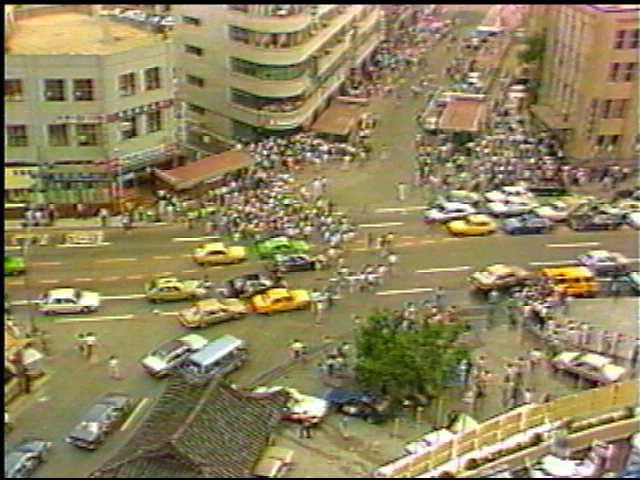
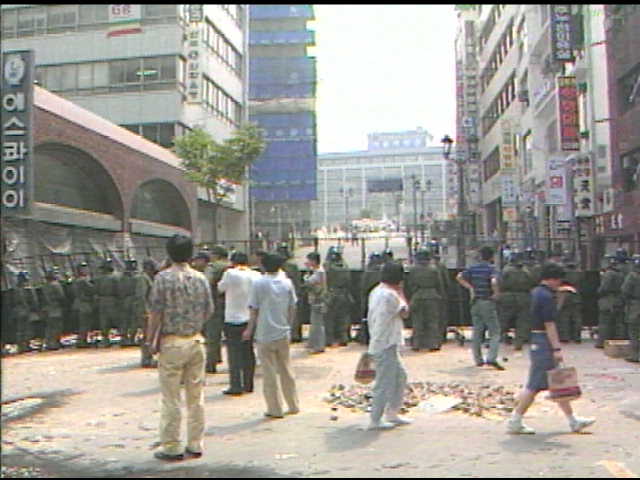
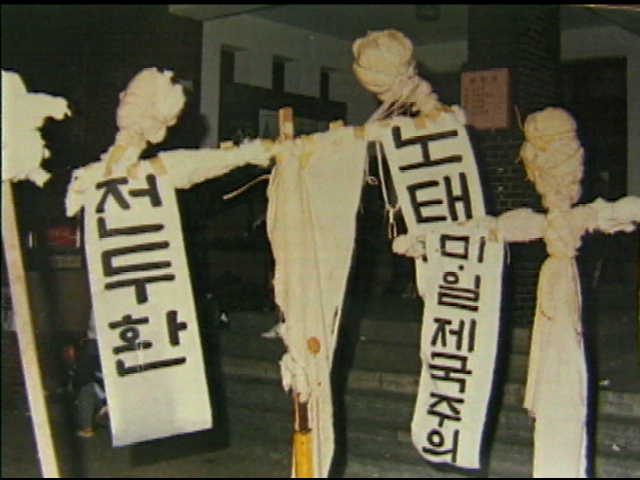
This is a documentary about 6 days of struggle at Myong-dong cathedral, which triggered the struggle of the June 1987. In the night of 10th June the protest group was chased by the police, came into the Myong-dong cathedral by accident. Their conflicts and hope, political situations of the time are seen in the film with various sources and witnesses. This film seeks hope for today while showing critical reinterpretation on the struggle of the June 1987.
Director
-
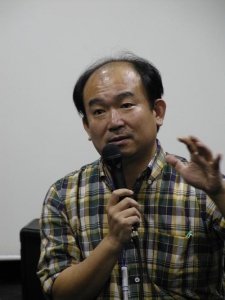 Kim Dong-won63 Years On (2008)
Jongno, Winter (2005)
Repatriation (2004)
Tekken family (2001)
One Man (2001)To rejoin the strike of 10 years earlier
I was in Myundong in June, 1987 as the evacuees in Sanggedong lived together with me from '86 had lived under tents in Myundong since April. For such a reason I could watch the Myungdong strike more closely than anyone and in the beginning I did throw fire-bombs along with strikers.
But around when the strikers started to restrict for outside members to into and the words of forced suppression was spreading, I came out of the struggle furtively. The reason was that I was urged to finish the work in the middle of being edited by the communication center of Sokang University. that I was involved then. More honestly speaking, however, the reason why I accepted at once their urgent request that I could ignore was actually I felt fear and burden of join them absolutely for the struggle. The atmosphere in the group of strikers were very restless and almost members looked like turbulent, I felt something strange from their looks ready for arrest and even death. Inconsistently, however, I couldn't completely get out of that historical place and moved around the hill of cathedral instead of going to the editing room. Another my mistake was I didn't take the spectacle of Myungdong Struggle. Even though my camera was out of order then, that was a small factor and I could have borrow one from others if I'd had mind to do shooting. My obscure and irresponsible behaviour at that time left some burden on my shoulder and the image and sound of the June sometimes appeared as phantasm, sometimes in my dream.
I first started to make this film in the mood for getting out of such burden bothers me and paying back all the debt. Initially I hoped to meet the strikers who looked so courageous recalling those indistinct memories and hear their stories like a tale of heroism. And I wondered what they do for living, what they think and how they remember about that Myungdong case. Yet those whom I met were ordinary people differently my expectation and most of them were trying to adopt themselves to reality of '90. My original intention expecting the grave look of 10 years earlier and something different was already wandering. But I realized the fact that they are so regretful for the Myungdong Struggle along with pride about it and they all raised questions on the process of being dissolved in particular. I also became surrounded by some questions while I learnt about the process of strike. On the around 14th day of June when the struggle came to receive a whole-hearted support from people and the words about violence of strikers and the threat of enforced suppression became abated, why did the Headquarter of National Movement and the cathedral require so strongly the strikers to disband? What is the reason the strikers who never thought about the disbandment had no choice but to disband after all? Where was the limit of the strikers and leading board of movement at that time? Had the enforced suppression been realized if they refused to disband until the end? If so, how has the Myungdong Strike and the Struggle of June developed?, what kind of image have these been remained in our memory at this moment, 10 years later from then. Although I am fully aware that it is useless to assume history, I can't neglect the regret and question about that case because the reality of present looks too dark compared with the fervent beauty then and far from the world of our dream. At that time everyone had the hope that the world would be changed if the government of Chun Do-Whan end and were prepared to dedicate partly for the hope to be realized. But, now, it's so hard to find out such hope and dedication in the situation which let people criticize president freely. The less people are interested in politics the more they are drawn into politics. Now the era of struggle is passing and we may not see again the scene of the hill of Myungdong in June, 1987.
I have finished this work neither making a clear result about many questions and regret nor feeling easier after paying back the debt for 10 years. It's because not only I was lacking of stereoscopic investigation but also we can't evaluate easily about the event of 10 years earlier relatively close to present. Also, I am sorry to give inconvenience to the witnesses of the sides of Headquarter of National Movement and Catholic accidently. I am sure that I'll revise this film whenever the part needed to be fixed or additional new facts are discovered.
What I learnt newly while producing this work is that hope is seen only to the people who practice what they have in mind and anyone can be like strikers of Myungdong Cathedral when living with the hope. Now I can say I will never escape if I am faced again with the opportunity like the Myungdong Struggle.
Review
<The 6 Days Struggle at the Myong-Dong Cathedral> is the record of a six-day struggle at the Myeong-dong Cathedral that triggered June Democracy Movement in 1987. Ten years later, the film recorded that the demonstrators cornered by police and accidentally gathered in the Myeong-dong Cathedral looked back on the time spent and the experiences there in 1997, it still resonates with us and poses questions to us even 30 years after the incident. The struggle at the Myeong-dong Cathedral occurred with the participation of about 800 students and citizens entering the cathedral by chanting abolishing protection of the constitution and overthrow of dictatorship, but it is meaningful in that it drew support and attention from the middle class not having been interested in the demonstration, such as the necktie unit (company employees), etc. However, it cannot escape from the criticism that they decided to call off the sit-in in six days, passed leadership to the government, and could not achieve the overthrow of dictatorship and the people's basic human rights. The memories of a wide variety of people who participated in the struggle reflect the excitement and passion, the sense of frustration and accomplishment at the same time. We could figure out the political condition at that time, through their testimonies, memories, and the documents with the moments of conflict, hope, tension and emotion in the demonstrators. The director asked us in front of the Myeong-dong Cathedral on June 1997. Do we have hope for the different world we had chanted, for the new world we have sought? And what should we do for the world? Listening to the cry and shout of the huge crowds gathered at the Myeong-dong Cathedral and Gwanghwamun in June 30 years ago, we also could ask the same questions now in 2017. What could we record and read regarding the Candle Plaza? And after 10 years, or after 30years, how will we remember the Candle Plaza? [Park Hye-mi]
Credits
- Director Kim Dong-won
- Assistatnt Director Lee Sang-yeop
- Written by Seo Kyung-hwa
- Producer Prun Production
- Music Jung Myung-hwa
- Narration Won Chang-yeon
Contribution / World Sales
- Contribution / World Sales Cinema DAL
- Phone 82 2 337 2135
- E-mail humi@cinemadal.com