
Synopsis
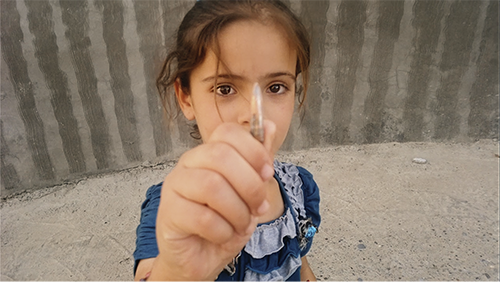
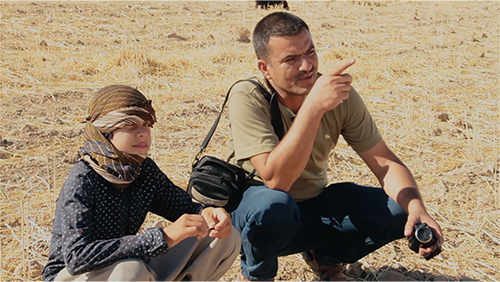
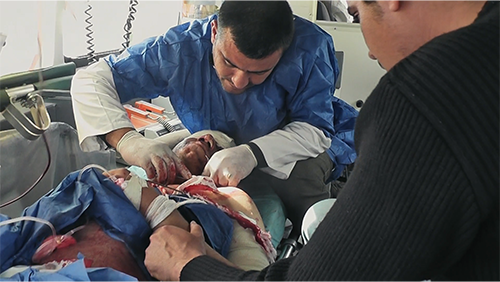
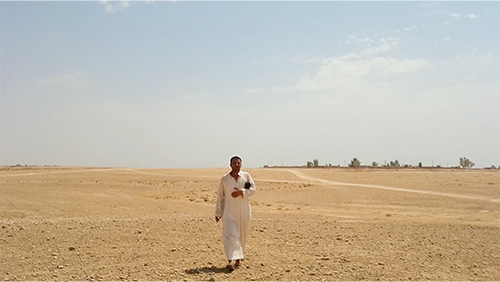
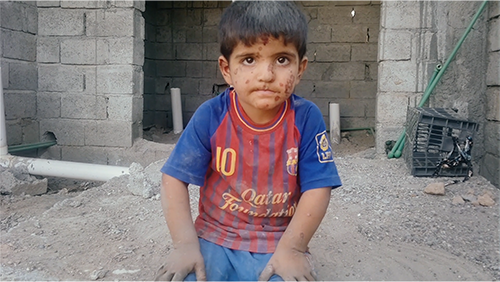
'Nowhere to Hide' follows male nurse Nori Sharif as he documents life in central Iraq's 'triangle of death' after American forces leave in 2011. He eventually turns the camera on his own family's five-year fight for survival, and ultimately captures a brave view of what he calls 'an undiagnosed war.'
Director
-
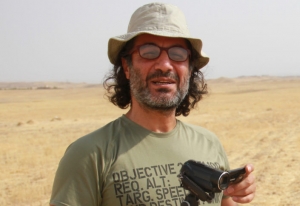 Zaradasht AhmedFata Morgana (2013)
The Road to Diarbakir (2011)My ambition is to let the audience reflect on the human consequences of a brutal reality where all taboos are violated.
With “Nowhere to Hide” I want to show that we are all part of this reality – war, explosions, victims, terrorism, they affect us globally, and we are all responsible, despite our geographical whereabouts. Meanwhile, I want to show the human resistance that is growing among these survivors; to show the hope of rebuilding after the
breakdown of civilization.In the end, as humans, the only thing that can help us survive is to believe that the will to build will always be stronger than the desire to destroy.
Review
Someone once said that a film is a medium for recording time. This film frankly shows what power the time recording has. <Nowhere to Hide> examines three years in Iraq after American and Coalition troops’ retreat in 2011 through a camera of Nori Sharif, a nurse at a general hospital in Iraq. Nori Sharif, who had changed his nursing position to the war’s wounded from general patients since America occupied, started filming his life and lives around him after independence. For three years, Nori Sharif rapidly went through changes from being an emergency room nurse to a refugee, from a father of a family to a father of three families due to his brothers’ deaths. But he feels still grateful to be with his family. The film doesn’t focus on international ideology covering Iraq nor Iraq’s internal political situation. Rather, it contains common Iraqis living their ordinary lives. Enjoying dances and music, not living with macroscopic point of view or for a cause, ordinary citizens of Iraq believe in their God and show their gratitude to him and Nori Sharif records what these people are experiencing, to be accurate, have to be experiencing because of the war in the first person viewpoint. The eyes and space of Nori Sharif as a man of the middle class as well as a curer means a lot in that sense. Not with a viewpoint of a victim, but of an observer transforming into the person in question, the film awakens us that we are not far from the lives of people suffering from horrors of the war. The film title
Credits
- Director Zaradasht Ahmed
- Producer Mette Cheng Munthe-Kaas
- Cinematographer Zaradasht Ahmed, Nori Sharif
- Editor Eva Hillström
- Music Ciwan Haco, Gaute Barlindhaug
- Sound Rune Hansen
Contribution & World Sales
- Contribution & World Sales East Village Entertainment
- Phone 1 917 757 1444
- E-Mail diana@eastvillageentertainment.com