

시놉시스
2차 대전 중 핵무기로 도시가 파괴된 지 70여 년이 지났지만, 위험은 여전히 남아있다. 현재 9개국이 약 15,000개에 달하는 핵무기를 보유하고 있으며, 미국의 어떤 무기들은 히로시마에 떨어졌던 원자폭탄보다 20배는 더 강력하다. 이 영화는 1945년 트리니티 테스트에서 현재까지 위험한 핵무기와 이를 둘러싼 문화와 매혹에 대한 것이다.
감독
-
 케빈 포드
케빈 포드
Kevin FordBy the River (2016)
Stone Barn Castle (2015)Mining through hundreds of hours of nuclear weapons testing footage, and safety videos, and propaganda films with Smriti & Eric was very difficult at points. For me as a co-director and editor, the challenge was to constantly follow my heart and to not just get stuck in my head, which would often feel paralyzed by what I was seeing. Through my feelings I began to see possibilities about how to arrange things in abstract patterns, following an emotional logic that I constantly talked through with my collaborators.
-
 스므리티 케샤리
Smriti KeshariFood Chains (2014)For some time, I have been thinking about putting people inside of a film, challenging the one-way, one-directional experience of viewing. Whether it’s a film, a theater performance or live music show—these are always projected at you. But what if you were in the center of the story? How would your perception of it be different, by changing the way you experience it?
We are surrounded today, everywhere, all the time, by screens. Rather than wandering cinematically through life, engaging all of our senses, we move through simultaneous open windows. All of us live in this new kind of space—a space that provides a fixed view of the world—a space that has become more controlled and seemingly more isolated.As technology progresses and we slip deeper and deeper into this passive experience, I feel we must pull the truth, the laughter and the roar of each individual out of isolation and into a space of shared experiences.
Thus The Bomb, and the challenge of the 21st century filmmaker.
While reading Command and Control, it become evident to me that my generation is living under this most awful nuclear cloud—that with a four—minute warning the world itself could likely end.
Nuclear weapons at their core are inhumane machines designed to indiscriminately erase existence. Because if their ingenious complexity, they have become a haunting ‘stamp of approval’ that marks the technological sophistication of nation.We live in a world with over 15,000 nuclear weapons. The threat of nuclear weapons is unimaginable; more so the denial and ignorance of it. We must first recognize the emotions nuclear weapons evoke, in order to understand how we’ve gotten to this reality. Out of sight and out of mind, these weapons are hidden underground and yet the nuclear threat persists. The less we know and talk about nuclear weapons, the more dangerous they become.
The Bomb was made to deliberately ignite an emotional and visceral understanding of the nuclear reality we are living in right now. Eric Schlosser and I have brought together the experimental spirit of Kevin Ford, the bold and politician art of Stanly Donwood, the technological and visceral viewing ethos of United Visual Artists (UVA), and fused it all together with the haunting live soundtrack by The Acid.
With The Bomb, we’re placing the audience in the center of the story of nuclear weapons—a story whose nucleus we have all been swirling in for the last 70 years, yet whose walls and particles have mostly remained invisible.
The experience of The Bomb could be quite shocking, and I hope it serves as an extraordinary and powerful wake-up call.
-
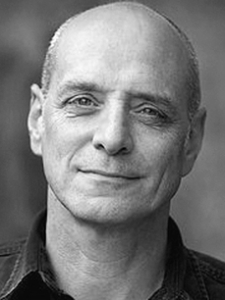 에릭 스콜로서
Eric SchlosserThe Bomb (2016)The project grew out of the research for my book Command and Control and the documentary based on it directed by Robert Kenner, shortlisted for an Academy Award this year.
The Bomb is a very different thing. It was created to give audiences a powerful, visceral sense of the nuclear danger we now face. Unlike the book and the documentary, it seeks to provide a fully immersive experience. When Smriti Keshari first proposed combining film, animation, live music, and screens that completely enclose the viewer, I thought it was a terrific idea. It seemed like one more way to pierce the denial and historical amnesia that surround this subject.
Today the threat posed by nuclear weapons is truly existential. And yet the public know remarkably little about it. More than fifteen thousand nuclear weapons are now hidden away underground or in submarines beneath the sea. They are literally out of sight and out of mind. Half the American populations either weren’t born yet or were small children annihilation, again and again. The danger has been forgotten—but it never went away. Nine countries now have nuclear weapons. Terrorists would like to get hold of them. And our own aging arsenal remains. Terrorists would like to get hold of them. And our own aging arsenal remains vulnerable to accidents, mistakes, poor judgment, even cyberattacks.
Without being didactic or simplistic, The Bomb explores the dark allure of these machines, the impossibility of ever fully controlling them, the death wish that lies at the heart of them. It asks you to confront an issue that could not be more urgent. Unlike the harms of climate change, the effect of a nuclear detonation will be instantaneous and irreversible.
I’ve really enjoyed collaborating with Smriti, Kevin Ford, The Acid, United Visual Artists, Stanley Donwood, and The Kingdom of Ludd. We believe that art can make a difference. I hope that every who sees The Bomb will be moved by it, inspired by it, and never forget it.
리뷰
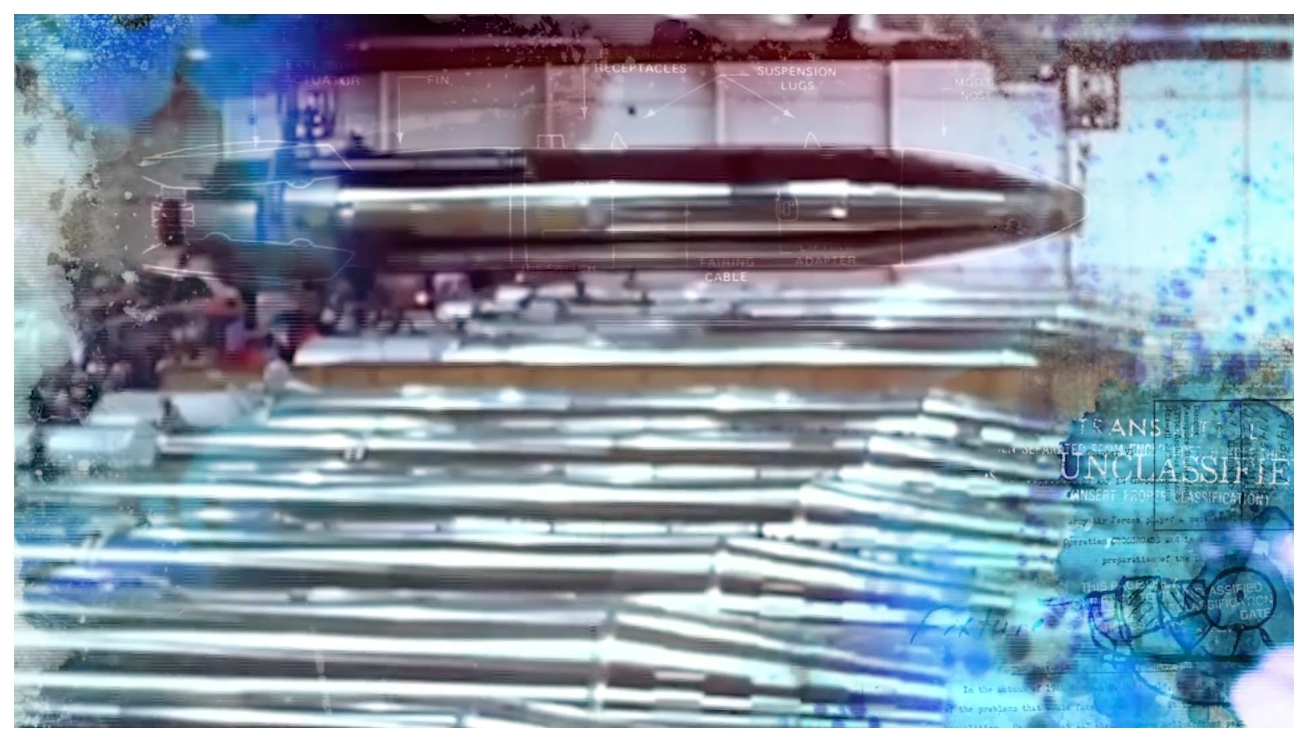
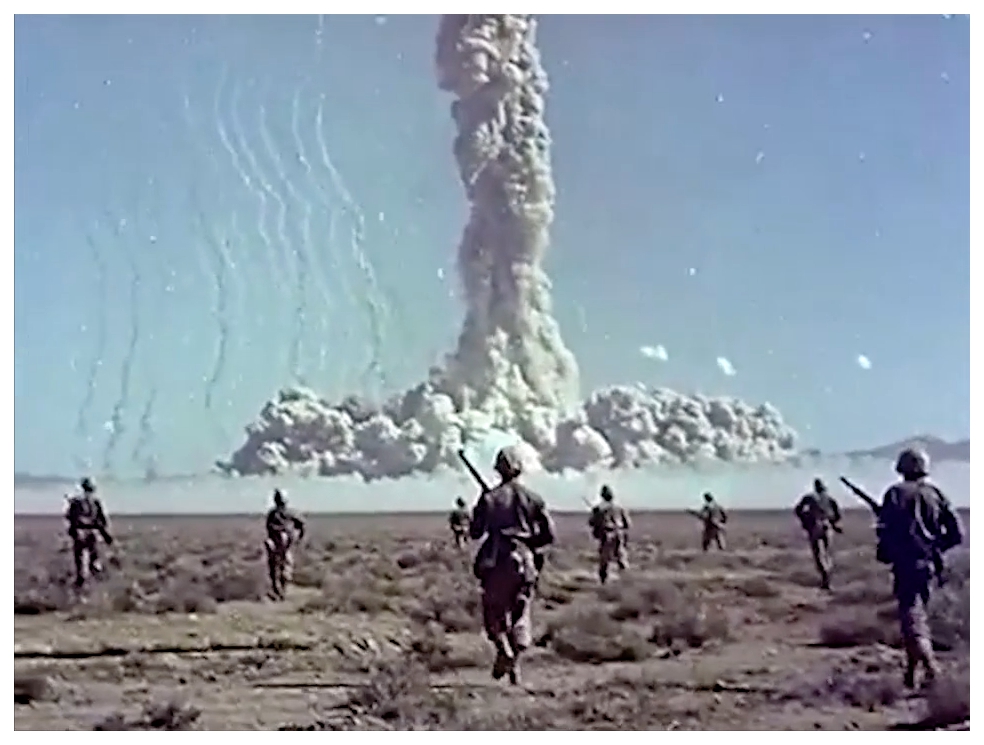
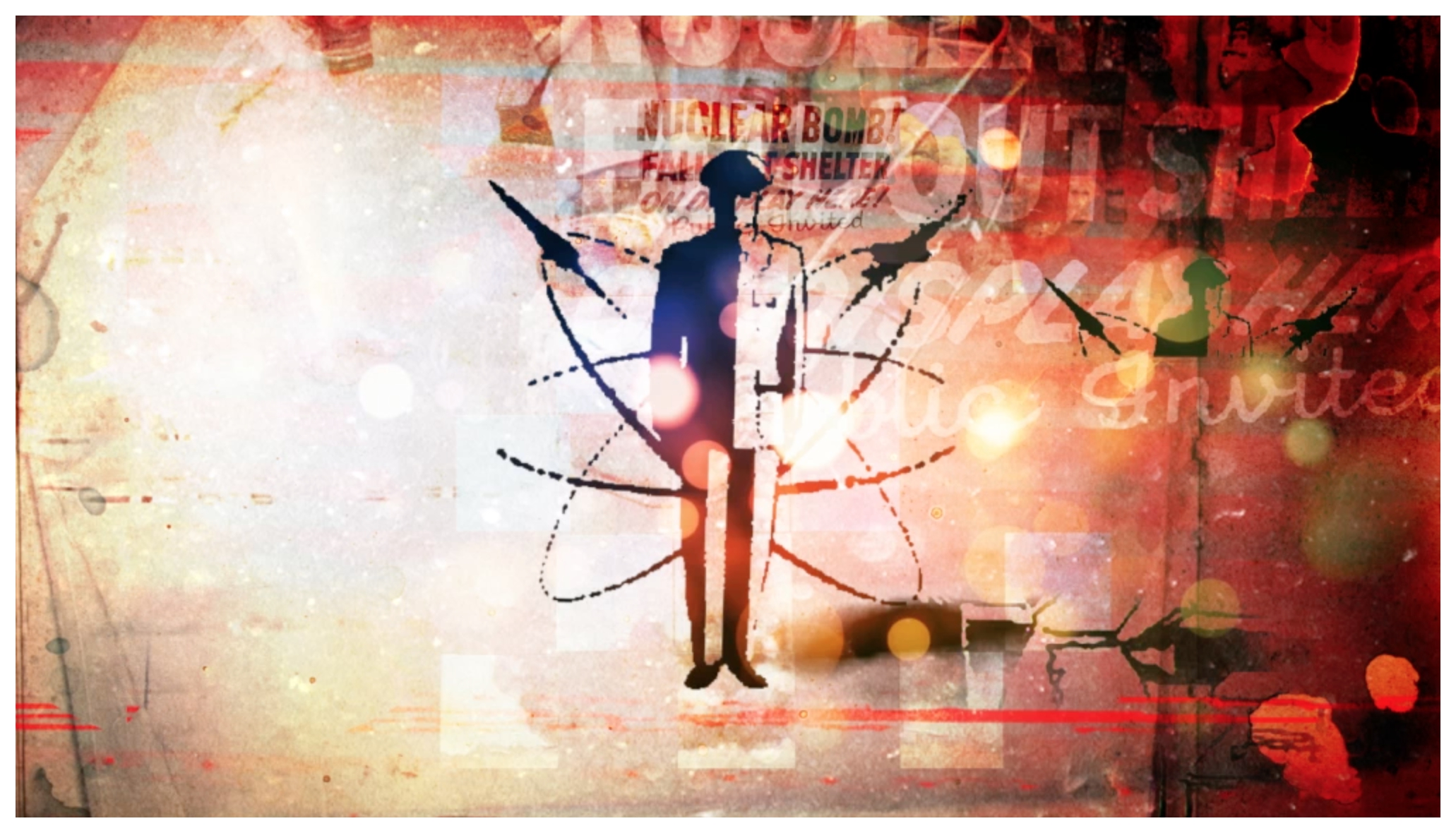
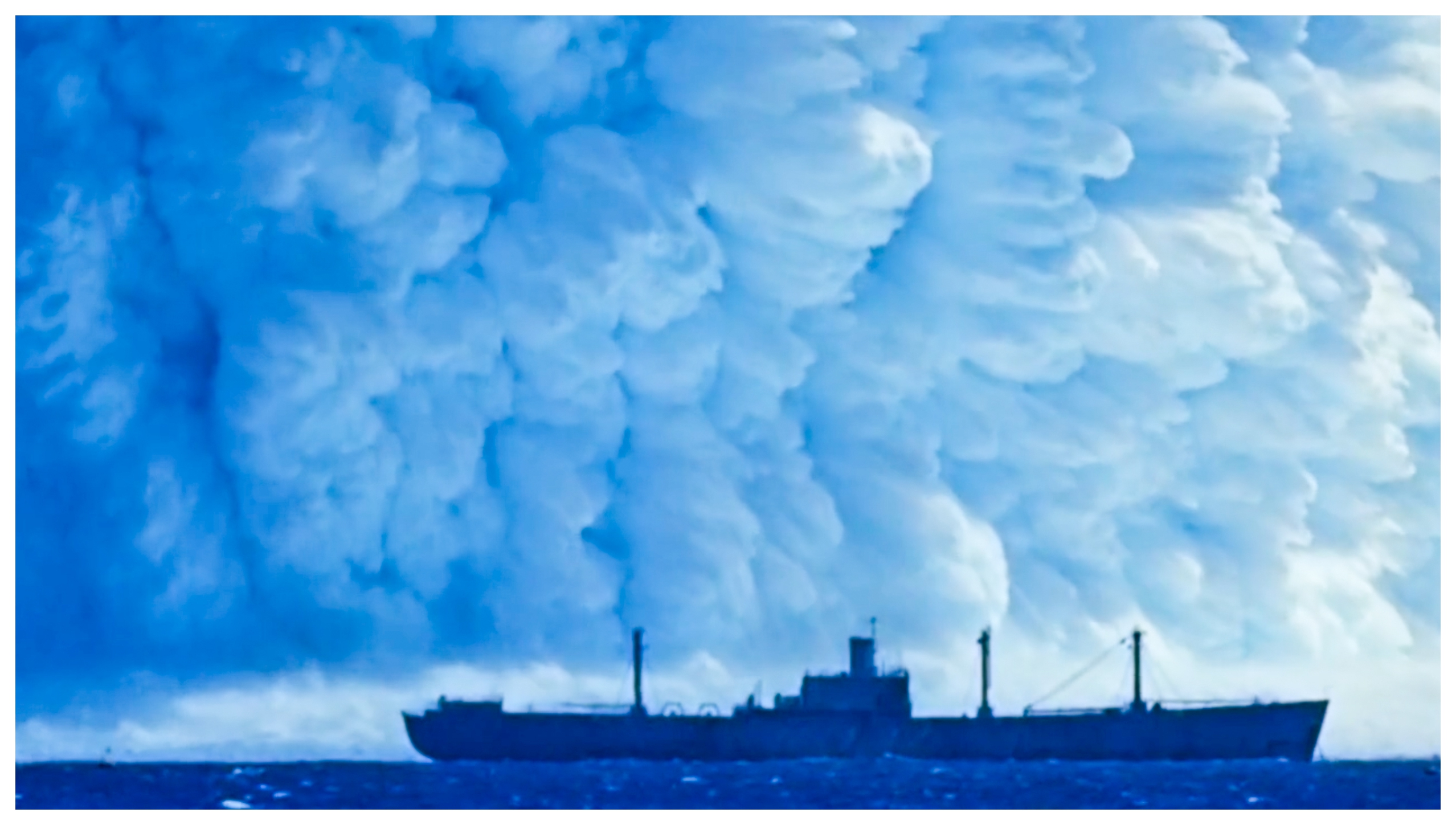
현장 촬영 대신 뉴스 클립과 홍보영상, 사진 등 자료화면들을 편집해 만든 편찬영화(compilation film)인 이 작품은, 세계 곳곳의 핵무기 산업과 관련한 다양한 자료들을 수집해 모자이크처럼 배치한다. 핵무기를 과시하는 각 나라의 군대 퍼레이드, 미사일 발사, 핵무기 제조, 고의의 실험과 불의의 사고, 핵폭발 장면 등의 이질적인 이미지들을 하나의 씨줄로 묶어내는 것은 일렉트릭 뮤직 밴드 ‘The Acid’의 음악이다. 트라이베카 영화제 상영 때 이 밴드가 라이브 연주를 했을 만큼 영화에서 음악이 갖는 비중이 매우 큰데, 전자 음악의 규칙적이고 미니멀한 비트에 맞춰 리드미컬하게 펼쳐지는 핵폭발 몽따주 씬은 아찔하리만큼 섬뜩하다. 반면, 이어지는 히로시마 원폭 생존자들의 장면은 아무런 대사와 음악이 없는 무음(silence) 속에 이미지만을 보여줌으로써 핵무기의 참혹함을 그 어떤 말과 음악보다 강렬하게 드러낸다. ‘방사능은 물로 씻으면 안전하다’는 내용을 주입시키는 냉전 시대의 교육영상은 인류가 얼마나 방사능에 무지한지, 혹은 세계 각국이 얼마나 의도적으로 국민들을 속이며 핵무기 개발에 열을 올려왔는지를 보여준다. 핵폭발 순간을 ‘거꾸로 돌리기’ 기법으로 보여주는 마지막 장면은 극장의 큰 스크린으로 볼 때 더욱 강렬하게 다가올 영화의 압권이다. 등장인물, 스토리 없이 자료화면만으로 이루어져있지만 이미지와 사운드의 정교한 배치로 ‘핵없는 세상’을 염원하는 제작 의도가 매우 분명하게 전달되는 영화. [황윤]
Credits
- Director Kevin Ford, Smriti Keshari, Eric Schlosser
- Producer Smriti Keshari, Eric Schlosser
- Music The Acid
Contribution & World Sales
- Contribution & World Sales Visit Films
- Phone 1 718 312 8210
- E-Mail jy@visitfilms.com